
Let's name what actually happens
Depression doesn't just lower libido. It numbs sensation itself. Your clitoris doesn't stop working, but the signal between your body and your brain gets scrambled. Pleasure feels distant, unreachable, like watching someone else's experience through frosted glass. And then there's the guilt layer. When you finally start coming out of it, there's often shame attached to wanting pleasure again, or fear that wanting it means you're "doing okay" when you're not quite there yet.
Here's the thing. Your body isn't broken. Your nervous system is recalibrating. And choosing the right tool matters.
Why lemon vibrators work differently when you're rebuilding
Most people think all vibrators are the same. They're not. When you're coming out of depression, you need something that meets your body where it actually is, not where you think it should be.
Lemon clitoral vibrators, specifically suction-based devices like the Lem vibrator, work in a fundamentally different way than traditional vibrators. Instead of buzz and pressure, they use gentle suction and pulsing patterns. For someone whose nervous system is still recalibrating, that distinction is crucial. Suction creates a gentler chain reaction in your body. It doesn't demand intensity. It invites response.
Many people returning to pleasure after depression report that traditional vibrators feel too aggressive, too demanding. The Lem vibrator and similar suction-based designs sit somewhere between penetrative sensation and external stimulation, meeting you in the middle without overwhelming your nervous system.
The three things to check before you choose anything
1. Can you start extremely low?
Depression sensitivity is real. Your nervous system might be jumpy or unpredictable right now. The best lemon vibrator for you has at least five intensity levels, ideally more. Many clinical therapists work with clients rebuilding after depression using patterns 1 through 3 exclusively for weeks. You're not failing. You're listening to what your body needs. Suction-based vibrators give you that granularity.
2. Does it have rhythm options beyond "faster"?
When you're numb, speed feels like the only way to chase sensation. It's not. Different patterns activate different nerve pathways. A good lemon clitoral vibrator has at least 8 to 12 distinct patterns. You're looking for wave, pulse, flutter, climb. These patterns feel different in your body and can bypass the numbness that straight vibration creates. This is why the Lem vibrator appeals to so many people in this exact situation. Its pattern range is designed for people with varying sensation needs, not just intensity chasers.
3. Is the material actually comfortable?
Depression makes skin sensitivity weird. Sometimes you're numb. Sometimes you're oversensitive. Silicone is your baseline here. Medical-grade silicone is non-porous, smooth, and feels consistent. No rough edges, no material surprises. If you have vulvodynia or vulvar pain happening alongside depression, this matters even more. Silicone doesn't absorb bacteria or irritants.
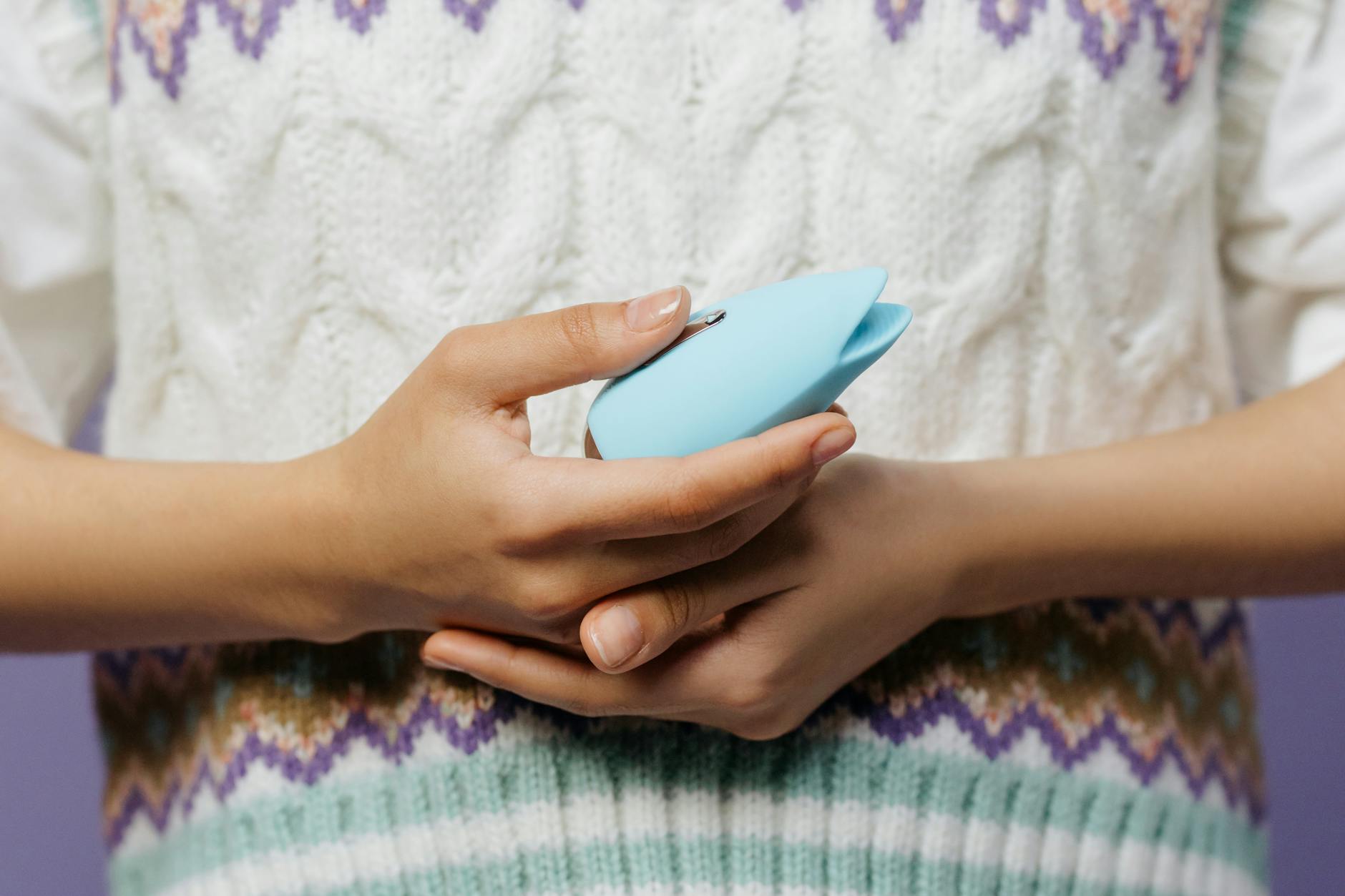
Photo by cottonbro studio on Pexels
How to actually start using it
This is where most advice fails. People say "relax" and "take your time" but don't explain what that looks like in practice.
Start clothed. Seriously. Not because there's shame, but because your nervous system needs permission to explore without pressure. Put the lemon vibrator on pattern 1, lowest intensity, over your underwear. Notice what you feel. Not what you think you should feel. What you actually feel. It might be nothing for a while. That's completely normal. Your nervous system is relearning the language of pleasure.
After a few sessions, move to skin contact. Still low intensity, still simple patterns. You're building a conversation with your body, not chasing an orgasm. Depression taught your brain that pleasure isn't safe. You're slowly, gently re-teaching it otherwise.
Most therapists recommend 10 to 15 minute sessions, no goal except noticing. Some sessions, you'll feel more. Some sessions, you'll feel less. Both are data, not failure.
The emotional part nobody talks about
Choosing a lemon vibrator when you're returning to pleasure after depression is also choosing to believe your pleasure matters. And that's scary sometimes.
You might feel guilt. "I should be doing other things." You might feel fear. "What if I'm not okay and I'm just distracting myself?" You might feel nothing, which can actually be the hardest part. Depression has taught you not to expect things to feel good. A tool is just a tool until your mind catches up to what your body is learning.
This is why working with a therapist during this transition is worth considering. You might want to explore how emotional intimacy affects your desire too, because pleasure doesn't exist in a vacuum. It lives in your whole nervous system, your history, your relationships, your sense of safety.
A lemon sucker like the Lem vibrator can be part of your recovery toolkit, but it's part of a bigger conversation you're having with yourself about what you deserve.
Comparing lemon vibrators for depression recovery
Not all suction-based or lemon-style vibrators are designed equally. Here's what to prioritize.
The Lem vibrator specifically is engineered for sensitivity work. It has ten distinct patterns, five intensity levels, and the suction design means it won't ever feel jarring or too aggressive. For someone rebuilding, this is often the better starting point than traditional vibrators, which can feel overstimulating.
Other clitoral vibrators like the Berri or Uno work well too, but they use buzz instead of suction. That's not wrong. It's just different. If buzz makes you feel more sensation, that can work. If buzz makes you feel numb or overwhelmed, suction is probably your move.
Don't get tricked into thinking you need to start with a toy designed for "advanced" users. That's backwards. You need something designed for sensitivity, relearning, and low-intensity exploration. That's exactly what lemon clitoral vibrators do.
Building a sustainable practice
Here's what sustainable looks like. You're not aiming for orgasm. You're aiming for a session where you notice one thing. Maybe it's warmth. Maybe it's a tingle. Maybe it's just permission to take up space and explore your own body without an agenda.
After depression, that's revolutionary.
Some weeks you'll use your lemon vibrator three times. Some weeks you'll use it once. Some weeks you won't. All of that is okay. Depression recovery isn't linear. Your pleasure practice doesn't have to be either.
What matters is that you're choosing to believe your body deserves attention. That's the real work. The tool just helps.
People also ask
Can I use a regular vibrator if I don't have a suction-based lemon vibrator?
Yes, but carefully. Start at the lowest intensity, simplest pattern. Many people returning to pleasure after depression find that traditional vibration feels too intense or too demanding. Suction-based designs are gentler, but if you only have access to a standard vibrator, begin fully clothed and give your nervous system time to adjust. If it consistently feels overwhelming, investing in a lemon clitoral vibrator is worth it.
How long before I feel sensation again?
That varies. Some people feel a spark within days. Others take weeks or months. Depression affects everyone differently, and so does recovery. Work with a therapist if numbness persists. Sometimes medication adjustments or trauma work need to happen alongside physical exploration.
Is it normal to feel nothing at first?
Completely normal. Depression creates numbness on a neurological level. Your nervous system might need time to wake up again. This is why lemon vibrators with pattern variety matter. Different patterns can activate different nerve pathways. Give yourself at least 4 to 6 sessions before you assess whether something isn't working.
What if using a vibrator brings up sadness or other emotions?
That happens. Returning to your body after depression can release a lot of feeling. It doesn't mean you're doing it wrong. Consider having a journal nearby, or a text ready to send to a trusted friend. Pleasure, healing, and grief can all exist at the same time. If intense emotions persist or feel destabilizing, talk to your therapist.
Should I tell my partner I'm using a lemon vibrator while rebuilding?
That's your call, but isolation during recovery can deepen shame. If you're partnered, consider sharing what you're doing and why. "I'm exploring sensation again after depression, and I'm using a tool to help my nervous system remember what pleasure feels like." Most partners understand. If yours doesn't, that's information too. Sometimes partners have hesitations about toys, and that's its own conversation.
Can depression come back and affect my pleasure again?
Yes, potentially. But now you know how to rebuild. That knowledge matters. You're not starting from zero next time. Your nervous system has learned the pathway once. It can learn it again. Having tools, having practices, having permission. Those stick with you.
You're allowed to take your time
Depression is a thief. It takes pleasure, anticipation, hope, all of it. Choosing a lemon vibrator and committing to your own recovery is an act of reclamation. Not triumph. Just reclamation.
Your body remembers pleasure, even when your mind doesn't. A good lemon clitoral vibrator meets your nervous system exactly where it is. Low intensity, varied patterns, no pressure. That's how you rebuild. Not all at once. Not perfectly. Just consistently, gently, on your own timeline.
If you want to talk through what your recovery might look like, or if you're navigating this alongside relationship changes, reach out. That's what we're here for.