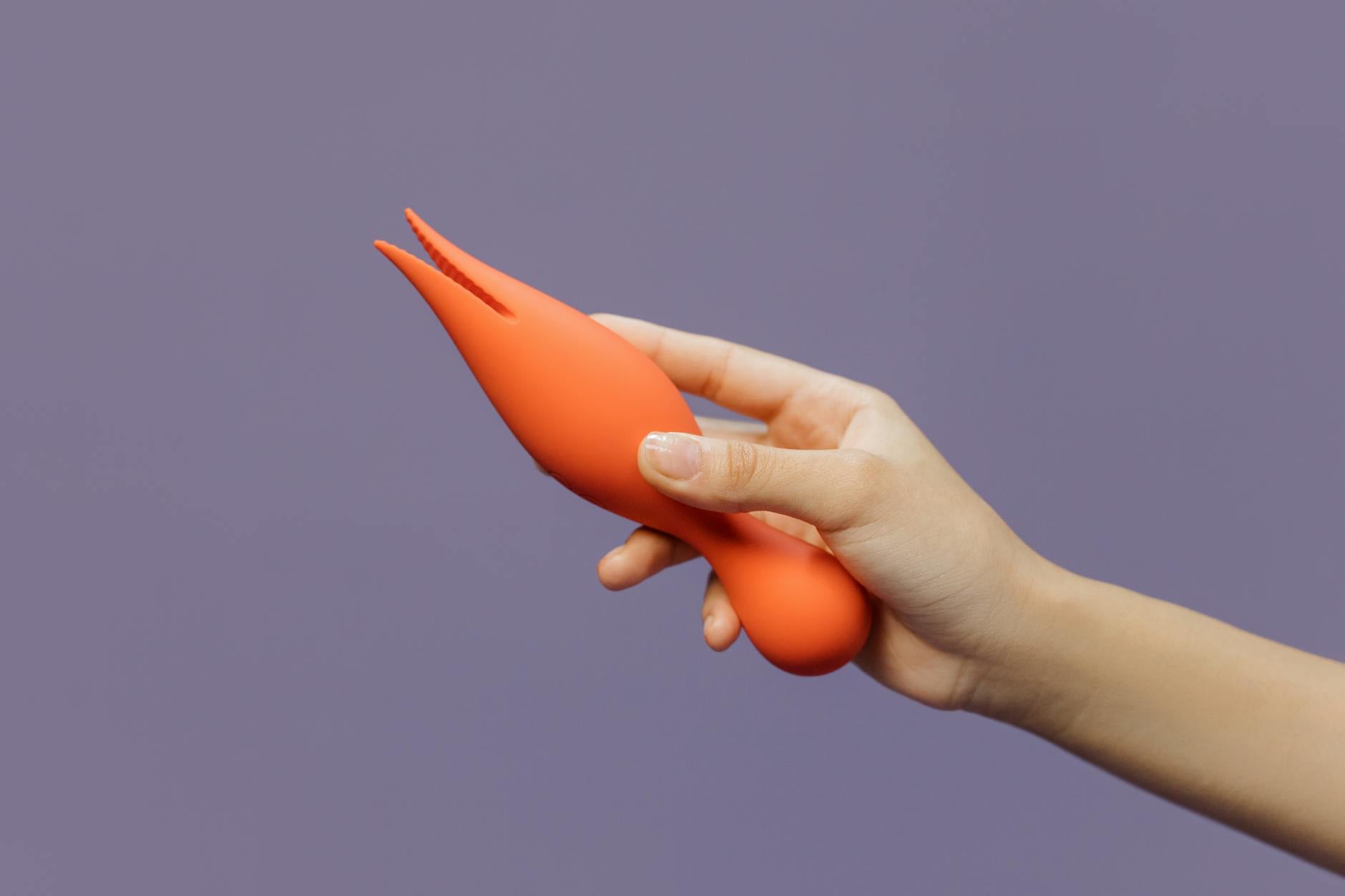
Let's talk about the real problem
Your partner says no to toys. Not "not right now." Not "maybe later." No, full stop. And the reason they give might be anything: it feels impersonal, unnecessary, threatening, weird, or just "I don't want that in our bed." What you're hearing is resistance. What's usually underneath is something else entirely.
I've worked with hundreds of couples on this exact friction point, and here's what I've learned: the toy isn't the real issue. The toy is a proxy for something bigger. Fear of inadequacy. Anxiety about change. Grief about how sex used to feel. Shame about exploring pleasure at all. Until you know what's actually happening, introducing a lemon vibrator or any clitoral vibrator will only deepen the resistance.
Why partners resist vibrators (the real reasons)
Let's separate the stated objection from what's actually going on.
"It will replace me." This one surfaces immediately and it's worth taking seriously. Your partner is worried that pleasure from a toy will feel better than pleasure with them, and that you'll want them less. This is partly ego, but it's also real relationship math. If your body responds more intensely to a suction device than to their touch, that's information. The fear is that you'll prefer the toy, and by extension, prefer being alone.
Here's the clinical truth: you won't. Air suction and manual touch are completely different stimulus patterns. A lemon vibrator doesn't replace a partner's hand, their weight, their presence, or the intimacy of being together. But your partner won't believe that until they see it.
"Toys mean we're broken." Some people grew up with messaging that needing help reaching orgasm, or wanting variation, means something is wrong. Toys become a symbol of failure. Your body doesn't work right. Your relationship isn't enough. If your partner carries that story, a vibrator feels like proof of inadequacy, not a tool for pleasure.
"I don't know how I fit in." Partners often resist toys because they can't visualize what sex looks like with a toy involved. Will they just watch? Will they feel sidelined? Is their job now to hold a vibrator while they stand uselessly to the side? The uncertainty is paralyzing, and it's easier to say no than to navigate the awkwardness.
"This wasn't how we started." Longer-term couples sometimes resist toys because sex has a particular shape in the relationship, and toys feel like a betrayal of that shape. Introducing a lemon clitoral vibrator now reads as "what we had wasn't good enough," even if that's not what you mean at all.
The reframe that actually works
Instead of "I want to use a vibrator," try this: "I want us to find ways to deepen pleasure together. I've been curious about something. Can we explore it without pressure?"
That's not a small word swap. You're doing three things: (1) naming pleasure as the goal, not the toy, (2) emphasizing together, and (3) removing the implicit demand.
Then have the conversation when you're not in bed. Over coffee, in the car, anywhere neutral. Say something like: "I read that clitoral vibrators like a lemon vibrator work differently than fingers or a tongue. I'm interested in trying it, not because anything's wrong, but because I want to know what that feels like. I'd love your input on it. I don't want to do this without you being on board."
That's collaborative. It's also honest. You're not lying about your interest; you're framing it as exploration rather than complaint.
Starting smaller than you think
If your partner is deeply resistant, don't lead with the lemon vibrator. Lead with questions.
"What would feel okay to you?" Listen without defending. "Would it help if you were part of choosing it?" That shifts agency. "Can we agree on a specific time to try it, so it's not a surprise during sex?" Predictability lowers threat.
Some partners find it easier if the toy is introduced in foreplay, not as the main event. You're using a clitoral vibrator to warm up, not replacing partnered sex. Psychologically, that feels like addition, not replacement. And it's often true: air suction on the clitoris before penetration or other intimacy can deepen sensation throughout.
Other partners need to touch it first, understand it, watch you use it alone. Some actually want to read about how lemon sexual toys work. The pathway depends entirely on what your partner's real resistance is.
During sex, the choreography matters
Once you've cleared the conversation and your partner is willing to try, the in-bed experience needs to feel collaborative, not like you've suddenly included a third party.
Position it as foreplay, not the main event. Use the lemon vibrator for 5-10 minutes while your partner touches you elsewhere. They might kiss your neck, use their hands on your body, stay close. They're still engaged. The vibrator is augmenting what they're doing, not replacing it.
Let them control the pace sometimes. This sounds small but it's transformative. Your partner holds the lemon clitoral vibrator. You guide their hand. They're doing this to you, not being displaced by a device. The dynamic shifts entirely.
Build feedback into it. Say things like "That's perfect" or "A little higher" or "Keep that rhythm." This isn't just instruction. It's reassurance that you want them there, that their involvement matters, that you're present with them.
Use it together during partnered sex. If you typically have partnered sex before or after solo pleasure time, try using the lem vibrator during. Many couples find that air suction on the clitoris during penetration (if that's what you do) intensifies everything, and your partner gets to witness that intensity. They're not sidelined. They're part of creating it.
The emotional work (which is longer than the sex itself)
Your partner's resistance might soften after one good experience with a lemon vibrator. Or it might take months. Depending on what's actually driving the resistance, you might need to do deeper work around adequacy, shame, or change.
If your partner worries they're not enough, reassurance helps temporarily but doesn't fix it. That's a conversation with a therapist or a deep personal reckoning. If they grew up with shame around sexuality, a vibrator won't undo that fast. If the real issue is that sex between you has become rote and they're grieving what it used to feel like, the lemon sexual toy isn't the solution. Reconnection and curiosity are.
I'm not saying don't introduce the vibrator. I'm saying recognize that the vibrator is a symptom, not the cure. The cure is understanding why your partner said no in the first place, and whether that reason is fixable or whether it points to something bigger you need to address together.
Some partners will move from "no toys ever" to enthusiastic curiosity about clitoral vibrators. Others will always prefer partnered sex without tools, and that's a legitimate preference. Your job is to figure out which one yours is, and whether you can live with that answer.
If you do move forward, the practical stuff
Once you've cleared the emotional hurdles and your partner is willing, the actual mechanics of using a lemon vibrator are straightforward. Air suction devices are gentler and less intimidating than traditional vibrators, which sometimes helps reluctant partners feel more secure with the idea.
Start with the lowest setting. Use water-based lubricant generously. The sensations are very different from what your partner might expect. Show them what it feels like by letting them feel the suction on their forearm first (sounds odd, but it demystifies it). Laugh about it together. Make it human, not clinical.
Keep it in the bathroom or a drawer your partner knows about. Don't hide it. Transparency signals that you're not doing anything secretly, which builds trust. Mention how you're feeling using it. "I felt more sensation last time" or "I'm curious what pattern works best." You're including your partner in your exploration, even when they're not physically involved.
If your partner watches you use a lemon clitoral vibrator alone, or touches you while you use it, or eventually holds it during sex, that's progress. Progress doesn't have to look like full enthusiastic buy-in. It can look like acceptance and willingness to participate.
When it's not about the toy at all
Sometimes a partner's resistance to vibrators is actually about something else entirely. Money stress. Resentment about unequal household labor. Grief about aging bodies. Attachment to a particular version of sex that's slipping away. If that's the case, a lemon vibrator won't fix it, and pushing one will just add another point of conflict.
That's when you need to step back and ask: is the real conversation about toys, or is it about something deeper? If it's the latter, address that first. Once the foundation is more solid, introducing something like a Hello Nancy clitoral vibrator becomes a collaboration instead of a power struggle.
The long game
Relationships evolve. People's bodies change. What felt threatening five years ago might feel liberating now. A partner who's resistant today might be curious in a year, or might not, and either way that's information worth honoring.
Your job is to stay curious about what the resistance really means, to communicate what you actually want instead of what you think they'll accept, and to recognize that pleasure for both of you matters. Sometimes a lemon vibrator is the answer. Sometimes the answer is deeper emotional work. Often it's both.
FAQ: Using lemon vibrators when your partner resists toys
What if my partner says vibrators are "unnatural"?
Air suction mimics the gentle pressure of lips and mouth, which is about as natural as sensation gets. The mechanism is different, but the nerve stimulation is something human bodies already know how to experience. You might frame it as exploring a different kind of touch, not as something fake or wrong.
Can I use a lemon vibrator during sex if my partner still isn't fully on board?
Technically yes, but the energy will be off if your partner is resentful or uncomfortable. Sex requires presence from both people. If they're resistant, their body might be there but their mind won't be. That usually makes the whole experience worse, not better. Wait until you've moved beyond resistance into at least acceptance.
My partner thinks vibrators mean I'm not satisfied with our sex life. How do I convince them otherwise?
You might not be able to, at least not with words. Actions are what shift this belief. Continue showing up for partnered sex, continue expressing desire for your partner, continue being present during intimacy. Use a lemon clitoral vibrator as augmentation, not replacement. Over time, your partner will see that pleasure from a tool doesn't compete with pleasure from them.
Is there a less intimidating way to introduce air suction than a full-size lemon vibrator?
Some partners find smaller toys less threatening. The Hello Nancy product line includes options at different sizes and price points. You might start with something compact, or let your partner choose the toy rather than bringing one home yourself. Agency often reduces resistance.
What if my partner tries it once and hates it?
That's data, not failure. Some people genuinely don't like vibrators, and that's a valid preference. Others need multiple exposures before comfort builds. You could ask: "What didn't work?" Is it the sensation? The idea of it? Something about how it felt? Sometimes a small adjustment, like different pattern or lower intensity, changes everything. Other times, the answer is just no, and you honor that.
Can we use a lemon vibrator during partnered oral sex?
Absolutely. Many couples find this less threatening than solo use, because the partner is actively involved. You're using the clitoral vibrator while your partner is also touching you or inside you. It feels collaborative, and the intensity can be stunning for everyone involved.
How do I know if my partner's resistance is a dealbreaker for me?
Take time to sit with that question alone. Is it about the specific toy, or about having a partner who's open to exploration? Are you grieving a version of sex you want to experience? Is this about pleasure or about feeling understood and supported? The answers to those questions will tell you whether this is something to push through or something to accept.