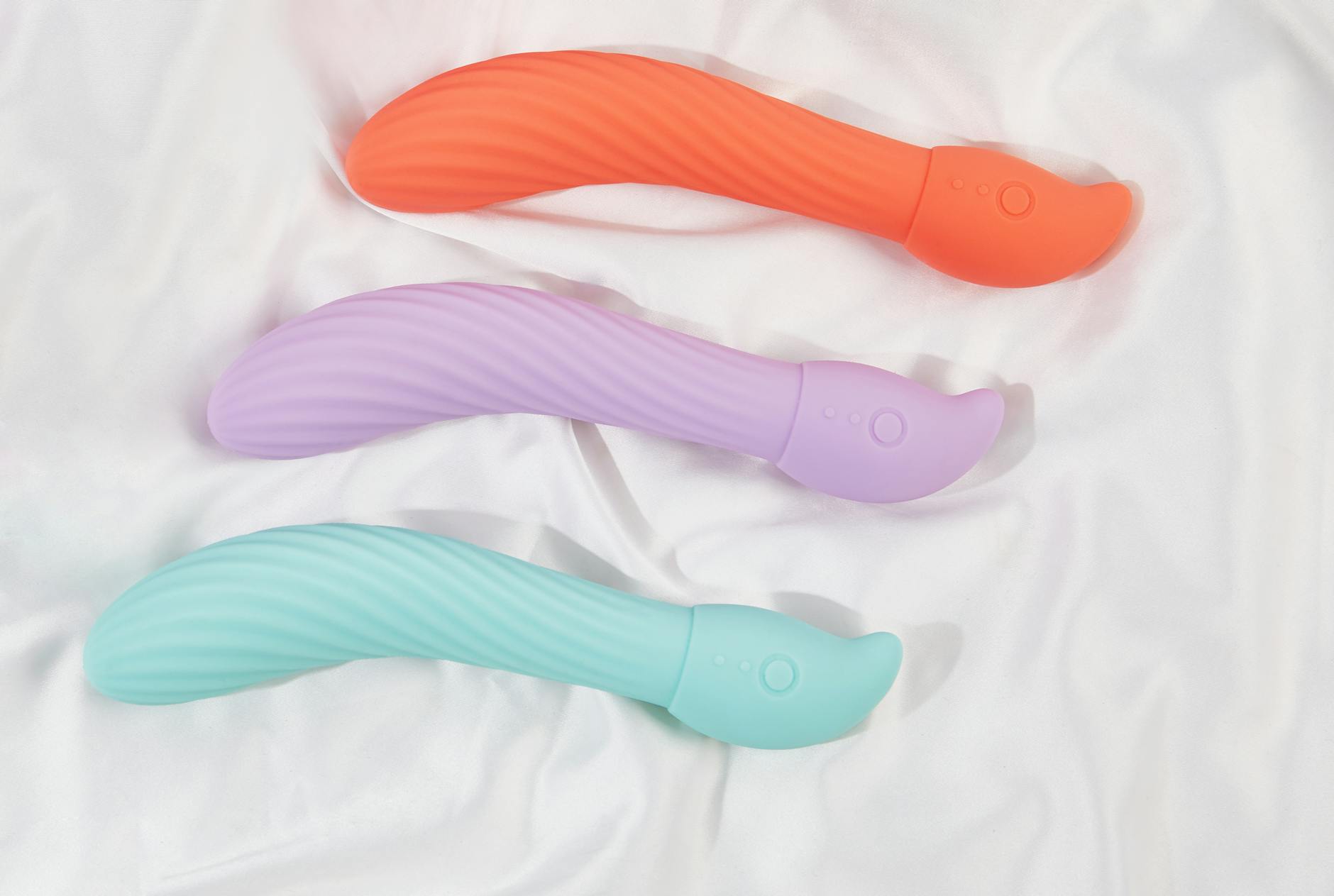
Why Lemon Vibrators Feel More Intense With Partners: Solo vs. Couples Play
Let's be real. The same lemon clitoral vibrator that feels predictable on Tuesday evening when you're alone can feel wildly overwhelming on Saturday night with your partner watching. It's not your imagination. The intensity genuinely shifts. And it's not just psychological—there's actual neurobiology happening alongside the emotional piece.
This shift matters because a lot of people assume they're either doing something wrong or their body is suddenly malfunctioning. Neither is true. What's happening is that pleasure operates on multiple channels at once, and when you add a partner to the scene, those channels amplify each other.
The nervous system gets activated differently
When you're using a lemon vibrator solo, your body is in what we call a "closed loop." You're managing the stimulation, the timing, the intensity. Your nervous system isn't worried about being watched or about synchronizing with someone else's presence. It's free to settle into a rhythm.
Add a partner, and your nervous system shifts. You're now aware of another person's attention, breathing, and energy in the room. This isn't a bad thing. It's actually a feature of human pleasure. Your brain is processing multiple streams of sensation and social input simultaneously. The clitoral vibrator—whether it's the Lem or another suction toy—is still doing exactly what it did solo. But your nervous system's capacity to register that sensation has changed.
This is partly why some people find couples play with lemon vibrators feels overwhelming at first. Your body is doing more processing work, which can make the physical sensation feel sharper or harder to control.
Arousal itself amplifies the effect
There's also a straightforward physiological piece. When you're aroused with a partner present, your baseline arousal level is higher. Your tissues are more engorged, your clitoris is more sensitive, and your nerve endings are more responsive. That higher baseline means the same vibrator intensity registers as stronger stimulation.
Solo arousal and partnered arousal often feel different in intensity just because of where your body is starting from. Solo, you might build arousal gradually over 10-15 minutes. With a partner, the arousal ramp can be steeper. A lemon clitoral vibrator that felt medium-intensity at a lower arousal level can feel genuinely intense once your body has been warmed up through kissing, touch, or conversation.
If you're used to using your clitoral vibrator when you're not fully aroused yet, that's a different sensory experience than using it when you're already at a 7 out of 10. Partners tend to push that baseline higher faster.
The attention factor is real
Between you and me, pleasure is partly about where attention is. When you're alone with a vibrator, your focus is internal—you're tracking sensations, timing, what feels good. You're your own audience.
When a partner is involved, there's a social element. Somebody else is paying attention to you. This can activate what I call the "witnessed pleasure" channel—which can feel amazing or overwhelming depending on your relationship comfort and how much consent and communication you've established beforehand.
Some people find that being observed using a lemon vibrator actually enhances pleasure because they're getting feedback (verbal, physical, energy-based) in real time. Others find it initially jarring because they're used to pleasure being private. Both are completely normal.
Anxiety can mask as intensity
Here's something nobody talks about clearly. Sometimes the feeling of "this is too intense" with a partner isn't actually about the vibrator at all. It's low-grade anxiety about being watched, about whether your partner finds this hot, about whether you're doing it right, about what happens next. Anxiety and overstimulation feel similar in the body—both show up as overwhelm.
If lemon vibrators feel much more intense with partners, the first thing to check is: is this actually overstimulation, or is it anxiety? You can figure this out by pausing for 30 seconds, taking a breath, and checking in with yourself. Do you want to keep going? Do you feel safe? Or are you bracing?
If it's anxiety, the fix isn't turning down the vibrator. It's talking to your partner. Establishing that this is something you both want to explore, that there's no "right way" to use a clitoral vibrator, and that you can pause whenever you want. That conversation often makes the whole experience less intense in the stressful way and more intense in the good way.
How to manage the shift
If you're exploring lemon vibrators with a partner for the first time, or if the intensity has surprised you, a few things help.
Start at a lower pattern than you'd use solo. If you usually use the Lem on pattern 5, try pattern 2 or 3 when a partner's involved. You can always turn it up. It's harder to come down if you've already flooded your system.
Build arousal together first. Don't jump straight to the vibrator. Spend time touching, kissing, talking. Get your nervous system settled and your baseline arousal higher before introducing the toy. This makes the whole experience feel more integrated.
Tell your partner what feels good in real time. Not in a performance way. In a "yes, keep doing that" or "let me adjust the angle" way. This keeps you in control and keeps your nervous system from going into observation mode.
Use lubrication. This is relevant solo too, but with a partner it matters more because you're often playing longer. A water-based lube makes everything feel smoother and less intense in the mechanical sense, which can actually make room for intensity in the pleasure sense.
The pleasure paradox
Here's what I've observed after years of talking to people about their sex lives. Sometimes more intensity is what you want. Sometimes it's not. Neither is a problem. The key is knowing which one you're actually experiencing and communicating about it.
A lemon clitoral vibrator with a partner can feel more intense because you're aroused, because your nervous system is processing more information, and because being witnessed genuinely changes the experience. That can be wonderful. It can also be overwhelming if you're not expecting it or if there's trust work to be done with your partner first.
The solution isn't a different vibrator. It's clarity about what you want, communication about what's actually happening in your body, and permission to adjust as you go.
FAQ
Why do clitoral vibrators feel stronger with my partner present?
Your nervous system is processing more input when a partner is involved—their presence, attention, and energy all register as additional stimulation. Combined with higher baseline arousal, the same vibrator intensity registers as stronger. This is normal and doesn't mean anything is wrong with your body or the toy.
Is it normal to feel overwhelmed the first time using a lemon sucker with a partner?
Completely normal. The sensation + the social element + the newness can create a sensory overload feeling. This usually settles with communication, lower intensity settings, and slower build-up. If it continues to feel overwhelming even after talking it through, it might be worth checking whether there's relationship trust work to address separately.
Should I use a different vibrator setting with a partner versus solo?
Many people do, yes. Starting lower with a partner and working up gives you more control and helps you manage the amplified sensation. You might find you naturally settle at a different pattern than you use solo, and that's fine. Your body will tell you what intensity feels right once you're in the moment.
How can I help my partner understand that intensity shifts aren't about them?
Tell them directly. "When we play with the vibrator together, my body feels things differently than when I'm alone. It's not bad—it's just different. Higher arousal, more awareness, more sensation all happening at once. I might ask for lower intensity, and that doesn't mean I'm not into this or into you." Most partners appreciate that clarity because it removes the guesswork.
Can I use a lemon clitoral vibrator with a partner if I have a lower libido?
Yes, and sometimes partnered play actually helps. The presence of a partner and the social connection can sometimes ignite desire that solo play doesn't. Start with conversation and lower intensity, and let your body lead. Check out how to use lemon vibrators with partners for more specific strategies.
Is the intensity difference permanent, or will I adjust over time?
Most people adjust over time as they get more comfortable with a partner and the toy together. The first few experiences often feel more intense because everything is new. By the third or fourth time, your nervous system settles, and you have a clearer sense of what intensity actually feels good for you in that context. That said, some people always find partnered play feels more intense than solo—and that can be a feature if it's something you're both enjoying.
The bottom line
Intensity shifts with partners because your body is doing more work—more arousal, more nervous system activation, more social processing. That's not a malfunction. It's how pleasure actually works when it's shared. The trick is knowing that the shift is coming, communicating about it with your partner, and adjusting your settings accordingly. Most of the overwhelm clears up once you're not surprised by it anymore.