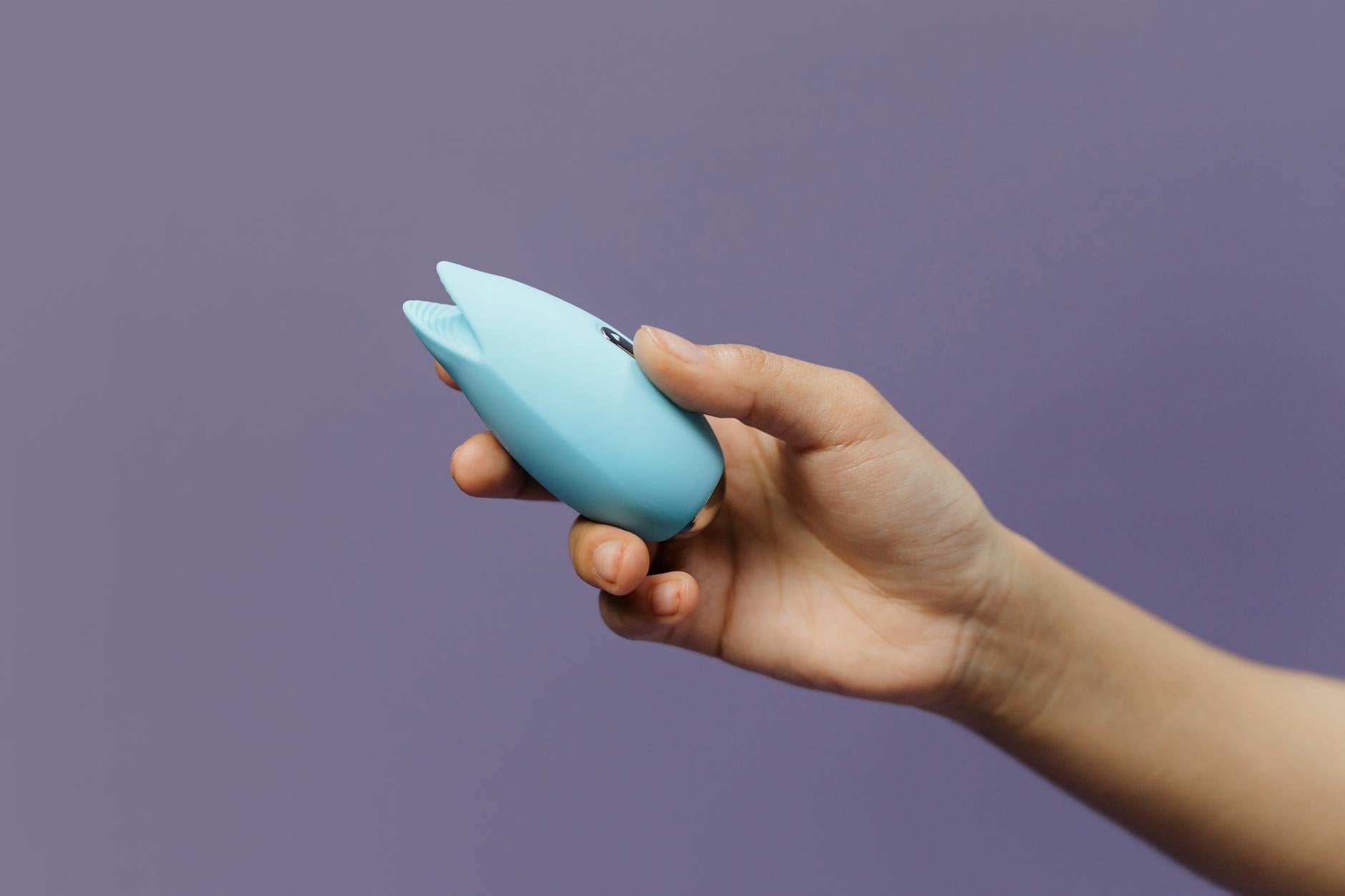
Let's be honest about this one
You buy a lemon vibrator, you're thrilled with it solo, and then you use it with a partner and think, "Wait, why does this feel completely different?" You're not imagining it. The same device, the same stimulation pattern, genuinely does produce different sensations depending on whether you're alone or with someone else. And the reasons are way more interesting than you might think.
Here's the thing: it's not just your head. It's neurology, attention, arousal architecture, and the actual physical environment around you. Understanding this gap is the difference between a lemon vibrator that feels mediocre in partner play and one that becomes a centerpiece of your shared pleasure.
The role of mental state
When you're alone with a lemon clitoral vibrator, your brain is free to focus entirely on sensation. You can daydream, concentrate on specific nerve pathways, adjust rhythm based on your exact arousal level in real time. You're the director, the performer, and the audience.
With a partner present, your attention splits. Part of you is tracking the physical sensation. Part of you is aware of your partner's breathing, their position, whether they're enjoying what they're seeing, what comes next. This isn't distraction in the bad sense. It's connection. But it does change how your nervous system processes the vibration.
Your brain also makes different neurochemical choices based on context. Solo use triggers dopamine and opioid pathways focused on self-reward. Partner use activates additional networks related to intimacy, vulnerability, and bonding. The lemon vibrator's sensation gets filtered through a different emotional and chemical landscape.
How arousal builds differently
Solo arousal typically follows a predictable curve. You know what you want, you pace yourself toward it, and you adjust the vibrator pattern to match where you are in that arc. Alone, you might spend 8 minutes at pattern 2, move to pattern 3 for 4 minutes, then finish with pattern 5.
Partner arousal is messier and more reactive. Your partner might slow down when you speed up. They might introduce touch, movement, or eye contact that shifts what feels good. A lemon vibrator pattern that felt perfect at minute 3 might feel completely wrong at minute 8 because the context has changed. You're building arousal together, which means the vibrator isn't the only source of stimulation anymore. It's one instrument in a duet.
This also means that a device you considered "perfect" for solo use might need adjustment in partnered play. You might discover you prefer lower intensity when someone else is present, because the added intimacy already provides arousal scaffolding.
The physical proximity factor
When you're alone, you control the exact angle, pressure, and distance of the lemon vibrator against your body. You've probably found the sweet spot through trial and error.
With a partner, the geometry changes. They're holding it, or guiding it, or their body is creating angles you wouldn't create alone. Even if they're trying to replicate what you do solo, small variations matter. A centimeter difference in angle can completely change which nerve clusters get stimulated. A partner's hand is warmer than yours. Their movement is less predictable, which some people find more engaging and others find less controlled.
If you're the one using the lemon vibrator on your partner, you're also learning their body in real time. What pattern makes their breath catch? What intensity causes them to pull away? This is information-gathering, and it's genuinely intimate work.
Vulnerability and the nervous system
Here's something people rarely talk about: being watched while experiencing pleasure activates your nervous system differently. Your body can interpret attention as a mild threat, even positive attention. This is partly evolutionary. Vulnerability historically came with risk.
When you're alone with a lemon clitoral vibrator, your nervous system is in a parasympathetic state. You're safe, you're in control, you can surrender fully to sensation. With a partner, even if you trust them completely, there's a slight sympathetic activation. You're slightly more alert. This isn't bad. It can actually deepen pleasure. But it's different, and it explains why some people find solo and partnered use produce distinct sensations.
This is also why communication matters so much. If your partner knows you need a moment to drop your guards, or if they understand you prefer less eye contact at certain points, the gap between solo and partnered pleasure closes significantly.
Integrating the lemon vibrator into partner play
Here are the practical moves that bridge the gap.
First, have a separate conversation outside the bedroom. When you're not using the lemon vibrator, talk about what feels good and what doesn't. What patterns did you discover solo? What's your preference for intensity? Is there eye contact you like or avoid? This removes the guesswork your partner might otherwise do.
Second, let them watch you solo first. This sounds simple, but it's powerful. Let your partner see exactly how you use your lemon vibrator alone. What angle you prefer, how long you typically use each pattern, what your face and breathing look like as you approach orgasm. This gives them a blueprint and often deepens their understanding of your pleasure.
Third, start slower than you think you need to. Partner-based stimulation with a lemon vibrator often works best at lower intensities initially because arousal is building through multiple channels. You might discover you prefer patterns you'd normally skip when solo. Let the experience be different. Don't try to force solo sensations into partnered play.
Fourth, give yourself permission to use it differently. Some people find that they prefer their partner to hold the lemon vibrator entirely. Others like hands-on collaborative control. Some want it as foreplay; others want it as the main event. There's no right use. Experiment and adjust.
When the lemon vibrator becomes a communication tool
One of the underrated aspects of using a lemon clitoral vibrator together is what it teaches couples about responsiveness. If your partner is paying attention to how your body reacts to different patterns, they're learning something fundamental about you. If you're guiding them toward what feels best, you're practicing vulnerability and direction in a low-stakes way.
Over time, this builds a kind of intimate literacy. Your partner learns you better. You learn to ask for what you want. The lemon vibrator becomes less about the device itself and more about the conversation it enables.
This is why some couples find that introducing a tool like this actually strengthens their emotional connection. It's not about the vibrator. It's about mutual attention and the willingness to explore together.
Managing expectations
If solo use of your lemon vibrator produces intense, reliable orgasms and partner use doesn't, that's completely normal and fixable. It doesn't mean the device isn't working or that your partner isn't doing something right. It means your nervous system and arousal pattern are responding to different contexts.
Many people find that over time, with communication and practice, partner play becomes just as satisfying as solo use. Some discover they prefer partner play once they adjust their expectations. Some find they genuinely prefer solo use and that's fine too. The point is to notice the difference without shame and adjust from there.
If you're in a long-term relationship, these adjustments also tend to deepen overall intimacy. The conversations alone are valuable.
FAQ: Lemon Vibrators and Partner Play
Is it normal for partner play with a lemon vibrator to feel less intense than solo use?
Completely normal. Your nervous system is in a different state. You're processing additional information (your partner's presence, response, timing). This doesn't mean something's wrong. It means you're experiencing pleasure through a different channel. Many people find that with communication and practice, partner play becomes equally or more satisfying. The intensity might change shape rather than decrease.
Should I use the same lemon vibrator pattern with a partner that I use alone?
Not necessarily. What works alone might be too intense or not intense enough with a partner. Start lower and adjust together. Your partner can help you discover patterns you might not explore solo. You might find you prefer completely different intensity levels depending on context.
How do I tell my partner I want to use a lemon clitoral vibrator without it feeling awkward?
Honestly, the conversation is less awkward if it happens outside the bedroom. Something like "I love using this tool solo. I'd love to explore it together. Can we talk about what that might look like?" removes the performance pressure. You're inviting collaboration, not demanding anything. Most partners appreciate the directness.
Can using a lemon vibrator with a partner make me unable to orgasm without one?
No. Vibrators don't change your physical capacity for orgasm. Some people find they prefer vibration for partner play but prefer hands-only stimulation solo, or vice versa. Your body's flexibility is actually remarkable. Using a tool doesn't rewire you.
What if I prefer solo use of my lemon vibrator to partner play?
That's valid. Some people find solo play more relaxing and pleasurable. If you're in a relationship and want to maintain that preference, you can. Or you might explore whether adjustments in positioning, communication, or timing would make partner play feel better. But preference for solo use doesn't mean something's broken.
How do I ask my partner to use my lemon vibrator on me without feeling self-conscious?
Guiding them is the answer. "A little more pressure," "slower," "right there," "faster." You're teaching them what feels good. Most partners appreciate clear feedback. It makes them feel effective rather than uncertain. The vulnerability of asking for what you want is also deeply connecting.