
Here's what usually happens
You've spent months or years learning your own body. You know exactly what pattern on your lemon clitoral vibrator gets you there. You know the angle, the speed, the rhythm. You know your own pleasure so completely that it feels almost meditative. Then your partner arrives, or a relationship shifts, and suddenly that confidence evaporates.
This is the most common transition I see in my practice. Not because anything is wrong. Because two nervous systems in the room create a completely different context.
The neurology of solo versus partnered pleasure
Your brain does different things when you're alone versus with someone.
Alone, you're in what I call a contained feedback loop. Your arousal builds on your own terms, your breathing matches your rhythm, your mind stays focused on what feels good. There's no mirror to check, no partner's timing to sync with, no awareness of how you look. The amygdala, which processes threat and social awareness, is quiet.
With a partner present, even if they're being completely supportive, that amygdala wakes up. You're monitoring their expression. You're aware of your body in space. You're thinking about whether they're enjoying this, whether they're bored, whether you're taking too long. This isn't weakness. It's your nervous system doing exactly what evolution designed it to do.
The result: you might need different stimulation, different timing, or a completely different headspace to arrive at the same place you reach easily alone.
Why your lemon vibrator might feel different (and that's completely normal)
Three things shift when you bring a clitoral vibrator into partnered sex:
1. The power dynamic changes. Alone, you control everything. With a partner, there's negotiation built in. Who holds it. What pattern you use. Whether they're watching or not. This isn't bad. But it requires a conversation your solo self never had to have.
2. Your nervous system is less settled. That amygdala activation I mentioned means your clitoris might need a longer warm-up, higher intensity, or a completely different approach to reach the same intensity of sensation. This is not a sign of dysfunction. It's neurobiological.
3. The shared intimacy changes the meaning. Using a lemon sucker alone is about your pleasure. Using one with a partner becomes about vulnerability, trust, and being seen. That emotional shift is profound. Sometimes it deepens sensation. Sometimes it requires patience while your brain catches up.
The practical steps for that first transition
If you're thinking about bringing your lemon vibrator into partnered intimacy for the first time, here's what actually helps.
Have the conversation before clothes come off
Don't make the vibrator a surprise. Tell your partner what you've learned about your own body. Explain that you use it, you enjoy it, and you'd like to try it together. Answer three questions: What do you like about it? Where do you want it used? Can I be involved or should I stay still?
This removes the moment of awkwardness during sex and lets your partner's nervous system settle too. You're not springing vulnerability on them. You're inviting them into something you've already discovered.
Start with it being about them watching you, not about you reaching an orgasm
This is the secret that most people skip. The first time you use your lemon vibrator with a partner present, don't optimize for your orgasm. Use it while they touch you elsewhere. Let them see what you like. Let them learn the pattern from observation, not instruction.
This does two things. It gives you permission to just be, rather than perform. And it gives your partner crucial information about your pleasure that no conversation can replace.
Use it as foreplay, not the finale
If you typically use your lem vibrator to reach orgasm alone, don't start there in partnered sex. Use it earlier in the encounter, at lower intensities, with your partner's hands on you too. This lets your nervous system warm up gradually and gives your partner time to adjust to the new presence in the room.
Many people find that once they're already aroused with a partner, the vibrator intensifies something that was already building, rather than creating a completely isolated sensation.
Communicate about timing, not performance
Instead of: "Can you use it on me?" Try: "I want to try this together. Can you hold it here while I guide the pressure?"
Instead of: "Is it working?" Try: "I'm close. I like this rhythm."
Instead of: "I'm taking too long." Try: "I need about five more minutes. I'll tell you when I'm getting close."
Framing matters because it keeps the focus on what's happening, not on outcomes.
What changes as you get more comfortable
After a few times, something shifts. Your nervous system learns that pleasure with a partner is possible. Your brain stops running the threat-detection software quite so loudly. You might find that you actually need less intensity with a partner than you did alone, because your whole body is engaged rather than just your focus.
Many people I've worked with report that their most satisfying experiences come once they've moved past that initial transition. The lemon clitoral vibrator becomes a language you both speak, rather than a solo tool you're trying to translate into partnered context.
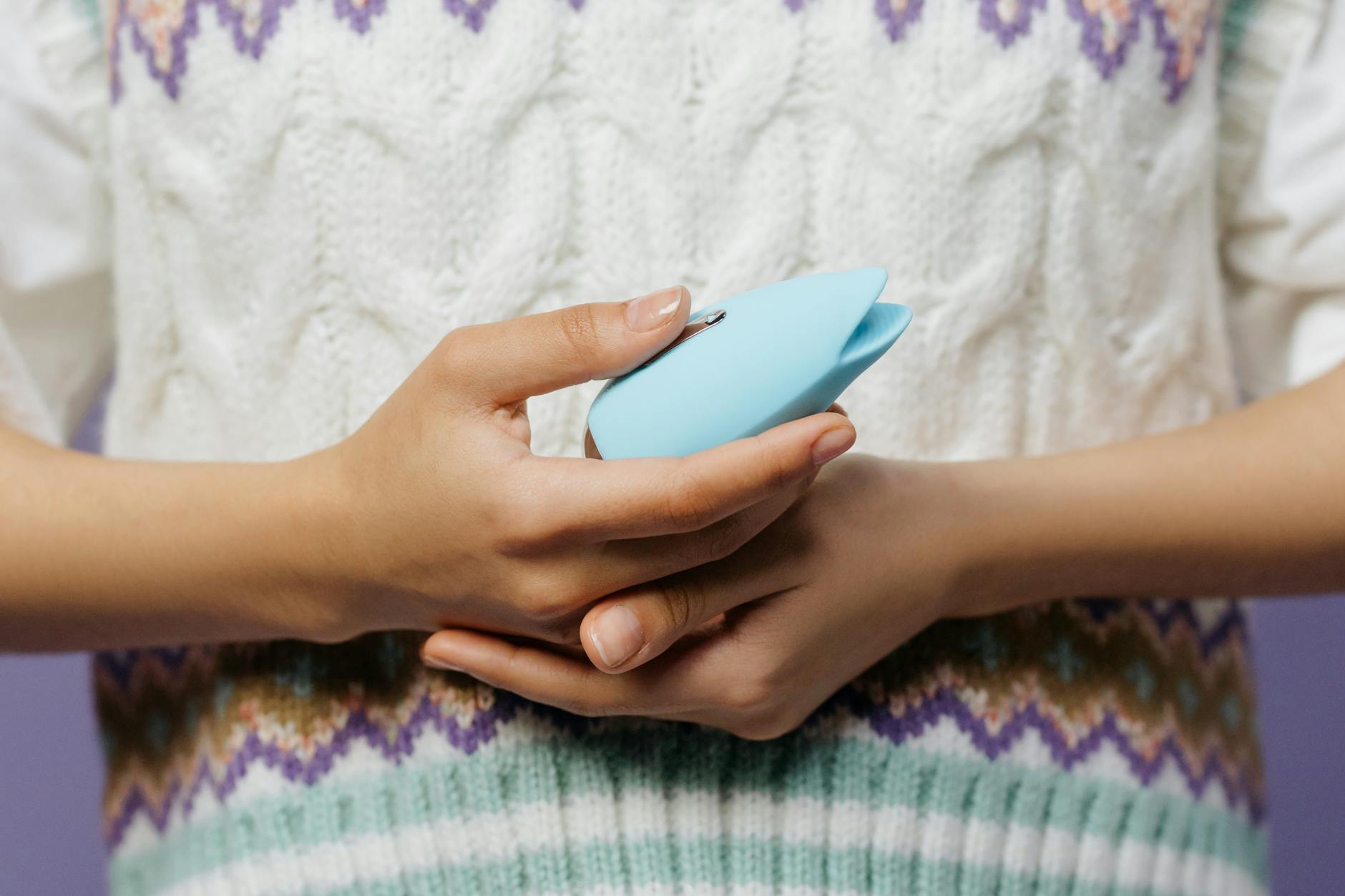
Photo by cottonbro studio on Pexels
The vulnerability piece that no one talks about
Honestly, the hardest part of this transition isn't physical. It's emotional. You're showing your partner something you've kept private. You're saying: here's what my body actually needs. Here's what I've learned about myself. Here's what pleasure looks like for me.
That's profound vulnerability. And it requires a partner who can receive it without judgment, without making it about them, and without trying to fix you. If your partner is defensive about the vibrator, or makes jokes about it not being "enough," or suggests you don't really need it. Stop. That's information.
Your pleasure is not a referendum on your partner's adequacy. A lemon vibrator alongside partnered touch isn't a backup plan. It's an expansion. Most people with vulvas need clitoral stimulation to orgasm, and most penis-in-vagina sex doesn't provide that. The vibrator bridges a gap. It's biology, not betrayal.
Why the Lem works particularly well for this
The suction mechanism of the Lem clitoral vibrator is quieter and less visually intense than other vibrators. This matters psychologically. Your partner can stay present and connected without the vibrator dominating the experience. The sensation is also more diffuse than direct buzzing, which means it often requires less conscious performance from you.
People often tell me that they feel less self-conscious using a lemon sucker with a partner because it doesn't feel like a replacement for their touch. It feels like an addition.
When to loop in a professional
If you're finding that you can't relax enough to enjoy pleasure with a partner even after trying these steps, or if your partner is consistently dismissive of your needs, that's worth discussing with a therapist who specializes in sexual health or couples dynamics. Sometimes the block isn't physical. Sometimes it's about trust, past experiences, or how you learned to relate to your own body.
The transition from solo pleasure to partnered intimacy is one of the most common things I support people through. It's tender work. It requires patience. But it's absolutely doable, and on the other side of it, most people tell me their intimate life deepened in ways they didn't expect.
People also ask
How long does it usually take to feel comfortable using a lemon vibrator with a partner?
It varies wildly. Some people feel natural about it after the first time. Others need four or five encounters before their nervous system fully relaxes. Give yourself at least three to four tries before you evaluate whether it's working. Your brain is literally rewiring its associations with pleasure in shared space. That takes time.
Should I use the same pattern with a partner as I do alone?
Probably not initially. Start lower and slower. Your arousal curve is different with a partner present, even if everything else is the same. You might find you eventually land on a similar pattern, or you might discover you actually prefer something completely different. Let it evolve rather than forcing the solo routine.
What if my partner wants to use the lemon vibrator on me but I find it distracting?
Tell them. Say something like: "I love this and I love that you want to do this. Right now I focus better when I hold it. Can we try that first?" You're not rejecting them. You're learning together. Most partners actually appreciate the clarity.
Is it normal to need more intensity with a partner than alone?
Yes. That amygdala activation I mentioned earlier genuinely reduces sensation in some people. Others need the intensity to stay focused while they're managing the emotional and physical data of partnered sex. If you find yourself turning it up, that's not failure. That's information. Your lem vibrator has multiple patterns for exactly this reason.
How do I handle it if my partner seems threatened by the vibrator?
First, listen without defending. Often the threat isn't about the vibrator. It's about inadequacy, about being replaced, about not being enough. Have a separate conversation (not during sex) about what they're actually worried about. Then be clear: this enhances your pleasure together. It doesn't diminish them. If they can't move past the defensiveness, you might need a couples therapist to work through it.
Can I use a lemon clitoral vibrator during partnered penetration?
Absolutely. Many people find this is the easiest entry point because you're both clearly engaged together. Your partner is inside you and you're stimulating your clitoris. There's less ambiguity about roles. Start with you holding it and guiding, then explore whether they want to participate once you're both comfortable.
The real truth
Bringing your solo pleasure into your partnered intimacy isn't a compromise or a workaround. It's an evolution. You're saying: I know myself. I know what I need. I trust you enough to show you. That honesty creates deeper connection than most people ever experience. The lemon vibrator is just the tool. The intimacy is the point.
If you're navigating this transition and it feels complicated, that's completely normal. These are big conversations wrapped in small objects. You're essentially renegotiating vulnerability with another person. Take your time. Be gentle with both of you. And know that on the other side of the awkwardness is usually something richer than what came before.
If you want to explore this further or talk through specific dynamics in your relationship, I'm here to help. Reach out anytime.