Here's the thing about hand fatigue
You're ten minutes into a longer session. Your forearm starts burning. Your wrist feels like it's going to snap. You have two choices: push through and ruin the experience, or stop early and feel frustrated. This is the most fixable problem in pleasure, and almost nobody talks about it.
Hand fatigue isn't a reflection of stamina or desire. It's a grip problem, a pacing problem, and sometimes a tool problem. The good news? Lemon vibrators, with their lightweight ergonomic design, are specifically built to solve this. Once you know the technique, longer sessions stop feeling like a marathon and start feeling like a choice.
Why the Lem vibrator works differently
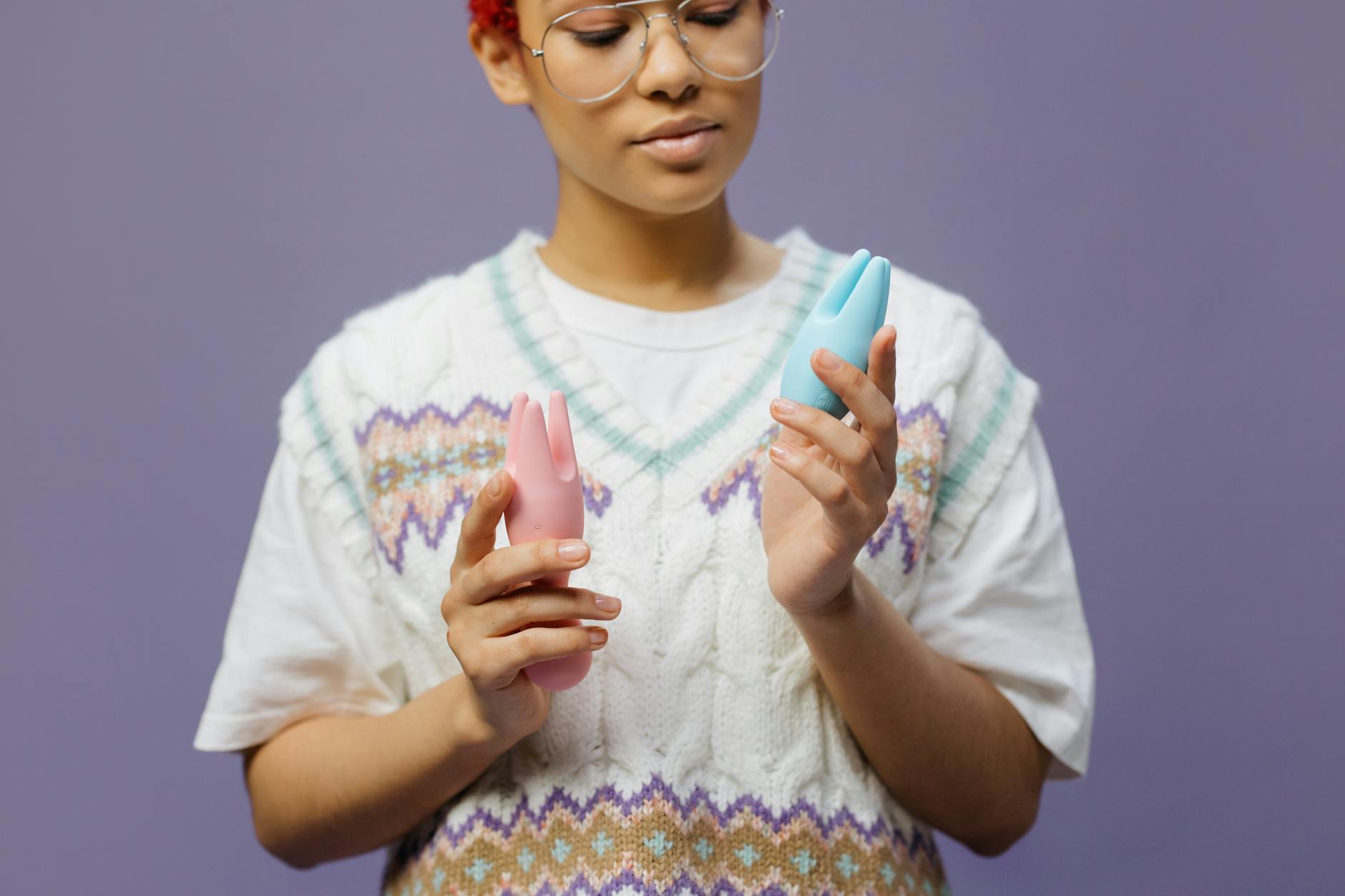
Most vibrators are heavy or require a tight grip to stay in place. Your hand compensates by gripping harder, which exhausts your forearm in minutes. The Lem's tapered silicone body and gentle suction mechanism work with your body instead of against it. The weight is distributed across your palm instead of concentrated in your fingertips, which changes everything about fatigue.
This doesn't mean zero grip required. It means smarter grip. The difference between a 15-minute session and a 45-minute session often comes down to one small adjustment in how you hold the toy.
The three grip styles for extended play
The Palm Cradle (best for 20-40 minute sessions).
Instead of pinching the stem between your thumb and forefinger, cup the toy in your open palm like you're holding a small bird. Your four fingers support the base, your thumb rests underneath. This distributes pressure across your whole hand instead of loading it into two fingers. You're using 80% less grip strength. Your hand can literally stay in this position for an hour without fatigue because you're not tensing anything.
The trade-off: slightly less precise control. But for extended sessions, that's a feature, not a bug. You're building arousal gradually, not hunting for one specific pressure point.
The Supported Position (for 30-60 minute sessions).
Rest the heel of your hand on your thigh, pubic bone, or a pillow. The lemon clitoral vibrator sits on your hand but isn't being actively held. You're just guiding it. Your arm does zero work. All the movement comes from very small shifts in your hand position or from the toy itself. This is how people do genuinely long sessions without exhaustion. You're not holding anything. You're just directing.
This requires a partner or a specific body position, but it's worth learning. Many people report their most intense longer sessions happen this way because there's literally nothing pulling their attention except sensation.
The Finger-Light Grip (for exploring different angles).
Hold the stem with just your thumb and middle finger, loosely. Your index finger stays free. This lets you shift angle constantly without resetting your grip. You're moving the toy in tiny increments, exploring sensitivity maps of your body. Your hand stays neutral and relaxed. This approach extends sessions by keeping novelty alive, which prevents mental fatigue even if your hand could technically go longer.
Pacing patterns that preserve stamina
Hand fatigue often comes from operating at full intensity the entire session. You wouldn't run a 5K at sprint pace. Same principle applies here.
The Ramp. Start at pattern 1 or 2. Every 5-10 minutes, increase one level. Don't jump from level 2 to level 7. This keeps your body engaged and your hand actively working at varying intensities. By the time you reach higher patterns, you're ready for them physiologically. Your forearm isn't burnt out from holding maximum intensity for 30 minutes straight.
The Wave. Alternate between lower and higher intensities every 3-5 minutes. Intensity spike, rest, build, spike again. This gives your hand recovery periods without stopping. You stay in pleasure, your forearm gets micro-breaks. Sessions extend naturally because you're managing effort like interval training.
The Plateau. Find a pattern that feels perfect. Stay there for 15-25 minutes without changing. This might sound counterintuitive, but it actually reduces fatigue because your hand doesn't have to re-adjust constantly. You hit a groove. Everything goes on autopilot. Many people report this is when longer sessions start to feel effortless.
Strategic breaks that don't kill momentum
Taking a break doesn't mean stopping completely. It means pausing the device, keeping your hand in place, and breathing. Thirty seconds. Ninety seconds max. Your arousal doesn't disappear. Your hand recovers. You come back stronger.
Better yet, use breaks to switch positions or grip styles. Supported position for 10 minutes, then palm cradle for 10. Your hand never does the same work twice in a row. Fatigue is delayed because you're spreading the load across different muscle groups.
Some people use breaks to add external stimulation. Keep the Lem on a lower pattern while you touch yourself elsewhere. Your hand gets a break from direct pressure but you're still building sensation. The session stays intense without your forearm staying maxed out.
Accessories and setup that extend your range
A small pillow or folded blanket positioned under your hand changes everything. You're not holding the weight yourself anymore. The support absorbs it. This single adjustment can add 20 minutes to a session because you've removed the primary source of fatigue.
Water-based lubricant, counterintuitively, can reduce fatigue. Better glide means less pressure needed to maintain contact. You're exerting maybe 30% less grip force when everything's slippery. Over a 45-minute session, that difference becomes massive.
Take a break to reapply. It's not wasted time. It's a natural pause point where your hand recovers while your arousal plateaus slightly. Then you restart with fresh intensity.
When to recognize you're pushing too hard
Fatigue is normal. Pain is not. If your wrist starts hurting, your hand cramps, or numbness appears in your fingers, stop. You're either gripping too hard, you're at the wrong angle, or you genuinely need a longer break.
This isn't failure. This is information. Next time, switch to the Supported Position earlier. Use lighter grip from the start. Add a pillow. Give yourself permission to do 25 minutes instead of 45. Pleasure isn't about duration. It's about how good it feels.
Some people have carpal tunnel or hand injuries that make longer sessions genuinely difficult. That's not a character flaw. The solution might be a partner holding the toy, or accepting that your sessions will be shorter and more intense. Both are completely valid.
Building real endurance over weeks
If you want to genuinely extend your session capacity, think in terms of progression. Week one, notice what kills your hand fatigue first. Week two, try a different grip style for those minutes. Week three, add a pillow support. Week four, experiment with pacing patterns.
Your hand gets stronger. Your arousal capacity expands. You start naturally holding sessions longer because your body adapts. This isn't forced. It's gentle progression, the way any skill develops.
Many people find that after three to four weeks of trying different techniques, longer sessions stop feeling aspirational and start feeling like the default. Your body learns what works. Your hand stops rebelling.
The real benefit of longer sessions
Extended play isn't just about quantity. It's about the quality of arousal you can build. Your nervous system has time to fully engage. Tension releases. Sensation becomes more nuanced. Many people report that their most memorable experiences happen after 30 minutes, not during the first 10.
But only if your hand isn't screaming.
The lemon vibrator's design, combined with smart grip technique and pacing, removes that barrier. You get to stay present. You get to explore sensation without that exhaustion anxiety creeping in. Longer sessions become genuinely pleasurable instead of becoming another thing your body has to endure.
People also ask
How long should a typical lemon vibrator session last?
There's no "should." Some people love 10-minute sessions. Others want 45 minutes. What matters is that you can actually do what you want without your hand giving out first. If you naturally gravitate toward 20-minute sessions, that's your range. If you sometimes want to go longer, the techniques here make that possible without turning it into a physical challenge.
Can I use a lemon clitoral vibrator hands-free for longer sessions?
Not really hands-free, but close. The Supported Position I described earlier gets you about 90% there. Rest the toy on a pillow or your partner's hand. You're barely holding it. Some people use wedge pillows specifically designed for this. You're still technically guiding, but your hands can rest or roam. It's a game-changer for extended play.
Does using lower intensity patterns actually help with fatigue?
Completely. Lower patterns use less suction force, which means the toy stays in place with minimal grip pressure. You're not fighting to keep it stable. This is why starting at level 1 or 2 and ramping up is so effective. Your hand stays relaxed through most of the session. By the time you reach higher intensities, you're only holding maximum grip for minutes, not the whole time.
What if my hand still gets tired even with these techniques?
Try switching grips more frequently. Move to Supported Position. Take longer breaks between sessions. Some people genuinely need 24 hours between extended sessions because their hand tissue needs recovery. That's not weakness. That's just your body telling you its actual capacity. Honor that instead of pushing through.
Can a partner help reduce hand fatigue during sessions?
Absolutely. A partner can hold the Lem while you focus on sensation. They can operate pattern changes. They can give your hand complete rest while maintaining rhythm and pressure exactly how you want it. This often leads to longer sessions naturally because you're not managing two things at once. It's also intensely intimate if communication is solid.
Does switching between lemon vibrators and other toys reduce fatigue?
Sometimes. Different toys have different weights and grip requirements. The Lem is particularly efficient because of its design, but if you're genuinely doing multiple extended sessions in one week, alternating tools spreads the physical load across different grip patterns. Your hand muscles get variety instead of repetitive strain. But the Lem itself is already optimized to minimize fatigue compared to heavier adult toys.
Getting started with what actually works
You don't need to overhaul your entire routine tomorrow. Pick one technique from the grip styles section. Try it for three sessions. Notice what changes. Then add a second element, maybe strategic breaks or pacing patterns. Let this build gradually.
Longer sessions without hand fatigue aren't a fantasy. They're just technique plus the right tool. The Lem vibrator handles the tool part. The rest is learning how your hand actually works and respecting it instead of fighting it. That's it. That's the whole secret.
If you have questions about technique, body mechanics, or how to talk to a partner about extended sessions, we're here. Head over to our contact page and let's talk about what you're actually trying to build.