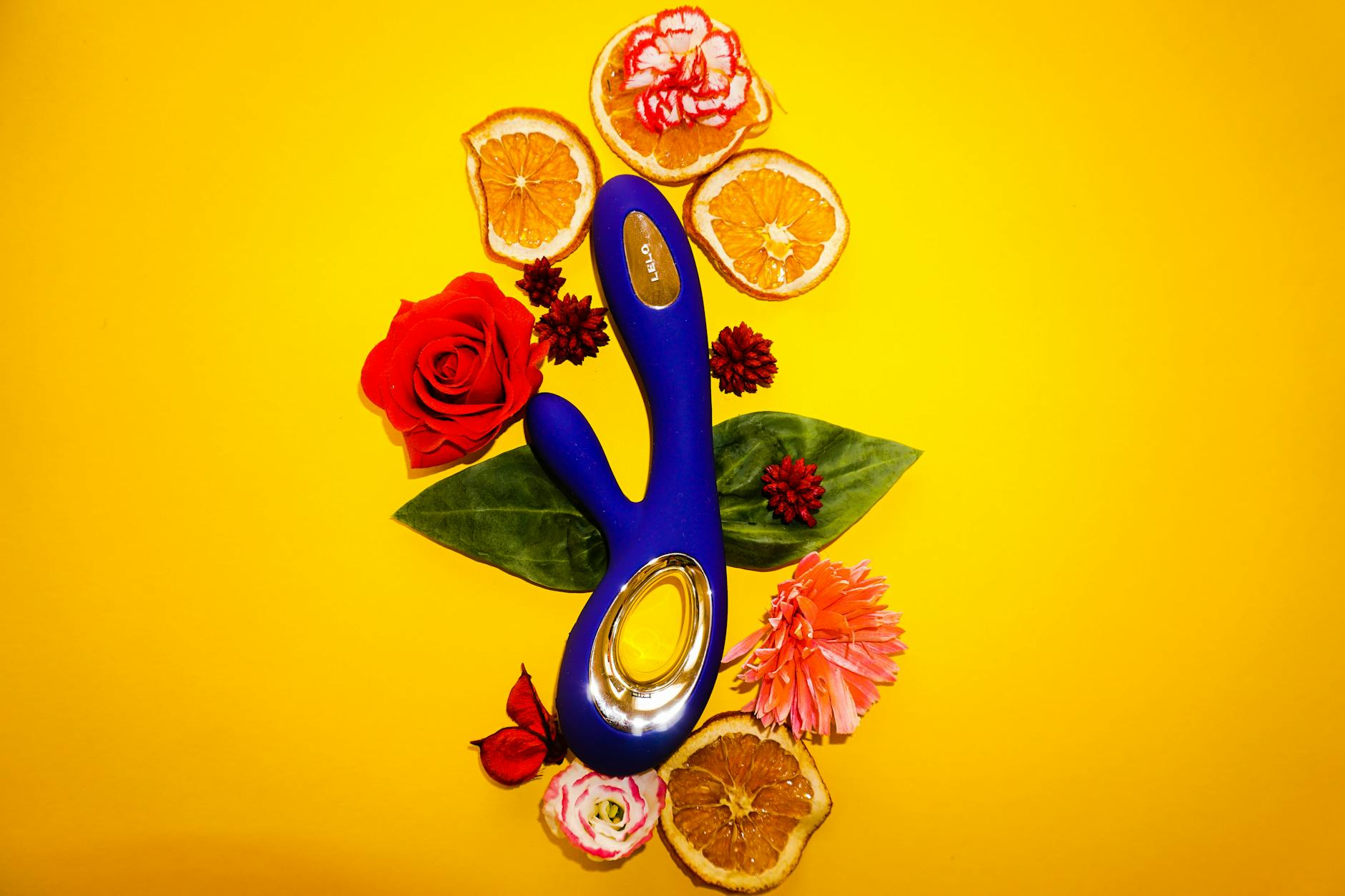
Not all orgasms feel the same, and that's exactly the point
Here's what nobody tells you. You don't have one orgasm setting. You have a range. Some days you want a quick, intense release. Other days you want something slow and subtle that builds for ten minutes. Some mornings you want barely-there sensation while your coffee brews. Some nights you want a full-body experience that makes you forget what day it is.
The problem is that most people think their toy has one job. It doesn't. A lemon vibrator, especially one designed for nuance like the Lemon, is actually a tool for exploring the entire spectrum of what your body can feel. You're not locked into one experience.
Understanding the intensity scale your body actually uses
Let's start with reality. When you think "orgasm intensity," you're probably thinking about one thing: how strong the sensation is. But intensity isn't really a single dial. It's at least three separate controls operating at once.
Frequency and pattern. This is the speed and shape of the vibration itself. Lower frequencies feel more like waves or pulsing. Higher frequencies feel sharper, more pointed. The Lemon's suction-based design gives you access to frequencies that traditional vibrators can't touch, which is why people report such different sensations across the intensity range.
Sustained pressure versus pulse. Some orgasms come from continuous stimulation. Others come from rhythmic bursts where stimulation builds, backs off, builds again. Your lemon clitoral vibrator can do both. The "how long you hold it there" part of the equation changes everything about what intensity actually feels like.
Mental state and arousal level. This is the part people skip. The same physical intensity can feel subtle if you're distracted or lightly aroused, and intense if you're fully primed. This is why foreplay matters. This is also why using a lemon vibrator solo versus with a partner can produce completely different sensations even at the same physical setting.
The subtle intensity orgasm (when you want barely-there pleasure)
Some mornings, some breaks at work, some quiet moments. You want something that feels good but doesn't demand your full attention. You want to feel pleasure without it being a production.
Start on pattern 1 or 2, hold the Lemon lightly against your clitoris rather than pressing hard. The suction vibrators work differently than friction-based toys. You don't need to grip or apply pressure. In fact, the gentler you are, the more control you have over subtlety.
Don't aim for an orgasm. Aim for sensation. Spend ten to fifteen minutes just noticing what different placements feel like. Direct stimulation on the clitoris feels sharper. Stimulation just above the clitoris, where the hood is, feels diffused and gentle. Stimulation on the side or at an angle changes the frequency effect.
The orgasm that comes from this approach, if it comes, will be gentler. It might not feel like the orgasms you're used to. That's not a failure. Some of the best orgasms feel almost meditative. They don't jolt you. They fold into you.
The focused intensity orgasm (when you want a clear, defined finish)
You know what you want. You're already somewhat aroused. You want to get there efficiently and feel that moment of release distinctly.
Leverage your warm-up. Spend a few minutes with your hands or without the toy, bringing yourself to about seventy percent arousal. Then introduce the Lemon at pattern 4 or 5, applying steady, consistent pressure to the most sensitive spot. This is where the clitoral nerve concentration is highest for most people, usually directly on the clitoris or just above it.
Don't move it around. Don't change patterns. One spot, one consistent pressure, one steady frequency. This creates the neurological equivalent of a focusing effect. Your body's arousal concentrates like light through a lens.
Most people reach a clear, distinct orgasm in three to eight minutes from this starting point. The sensation is sharp and localized. It has a definite beginning and end. If you want to come multiple times, this is the approach that makes that easiest because your body knows exactly what triggered the response.
The building intensity orgasm (when you want slow architecture)
There's a completely different approach. You start low and let intensity climb across ten, twenty, sometimes thirty minutes. The orgasm isn't the point. The journey is the point.
Start on pattern 1. Spend three to five minutes there. Your body will begin to warm up. Then move to pattern 2. Another five minutes. Then pattern 3. You're not rushing anywhere. You're layering sensation.
The reason this works is neurological. Your nervous system habituates to sensation. If you stay at the same frequency, stimulation starts to feel normal. But if you gradually increase it, your body never habituates. It keeps perceiving each shift as new. The orgasm that comes at the end, after you've climbed this slow staircase, feels completely different from a focused-intensity orgasm. It's wider, more full-bodied, often more surprising.
This approach also teaches you patience with pleasure. In a world where we're all trained to optimize and get efficient results, this is radical. You're not optimizing for speed. You're optimizing for depth.
The plateau-and-release orgasm (when you want waves)
Some people's bodies respond better to rhythm than to steady pressure. If you're one of them, this is your method.
Set the Lemon to pattern 3 or 4. Apply steady pressure for about a minute. Then reduce intensity by one pattern level and hold it there for a minute. Then increase again. You're creating a rhythm. Arousal builds, plateaus, builds higher. Think of it like breath. Inhale, hold, exhale. Arousal builds, sustains, recedes, builds higher.
Your body responds to this rhythm. Orgasms that come from plateau-and-release feel like waves. They might be multiple smaller releases, or one longer release with distinct waves within it. Either way, the rhythm creates something that single-speed stimulation can't.
This is also the method that works best if you're using a lemon clitoral vibrator with a partner. One of you can manage the Lemon while the other manages rhythm or sensation elsewhere. You're literally in sync. Your nervous systems are pacing together.
Pressure, angle, and how they change everything
Here's the technical part that actually matters. The same frequency at different angles and pressures creates entirely different sensations because of how the clitoral nerve branches.
Direct vertical pressure on the clitoris activates the main clitoral nerve cluster. This feels sharp and focused. It builds arousal quickly.
Pressure at a forty-five-degree angle, slightly off to the side, spreads stimulation across more nerve branches. This feels less intense but more spread out. Some people find this more comfortable. Some find it more pleasurable.
Low-angle pressure, where the Lemon is angled downward toward the vaginal opening rather than straight up at the clitoris, hits different nerve pathways entirely. This can feel totally different. Some people describe this as deeper or more internal, even though the toy isn't inside the body.
Spend time experimenting with angle. Your orgasm intensity changes significantly based on where exactly the stimulation is landing. This is one of the biggest variables people miss.
The aftercare part (why intensity matters after, not just during)
Intensity doesn't end when the orgasm ends. Your nervous system stays activated for a while. How intensely you came affects what you need in that window.
After a subtle-intensity orgasm, you might want to just lie there quietly. Your nervous system isn't flooded. You can be still.
After a focused-intensity orgasm, you might want grounding. Touch, breathing, movement. Your nervous system got a sharp signal and needs to come back to baseline.
After a building-intensity orgasm, you might feel emotional. This is normal. Your nervous system went on a journey. It's not unusual to feel tender, grateful, or needy of connection.
After a plateau-release orgasm, you might want to keep going, or you might feel complete. The rhythm your body learned can keep cycling.
This is why intensity matters. It's not just about how good the orgasm feels in the moment. It's about understanding what your body needs and why.
Combining methods with your Lem
You don't have to pick one. Once you understand how each method works, you can layer them. Start with subtle intensity while you're getting warmed up. Shift to building intensity as arousal deepens. Finish with focused intensity. Or use plateau-release for most of the experience, then shift to focused if you want a clean finish.
Your lemon vibrator is flexible enough to support all of this. The suction-based design means you can be gentle. The pattern range means you can build complexity. The shape means you have control over angle and pressure.
Most people spend years with a toy thinking it does one thing. You don't have to be that person. Your body is varied. Your pleasure is varied. Your tool should match that.
Pleasure is personal, and personalization is the whole point
When people ask me about using a lemon clitoral vibrator well, they're usually asking for rules. There's a "right" way to do this, they assume. There isn't. There's your way. And your way changes depending on the day, the time, your stress level, your arousal, your partner situation, what you've eaten, how much sleep you got.
Start experimenting. Try subtle. Try focused. Try building. Try rhythm. Notice what your body responds to. Notice what different intensities feel like in your nervous system, not just your genitals. Notice how intensity changes how you feel emotionally afterward.
That information is gold. That's where pleasure stops being random and starts being something you understand and can return to intentionally.
People also ask
How do I know if I'm using the right intensity for my body?
Your body will tell you. Right intensity feels good without pain. It doesn't numb out. It doesn't feel like too much. If you're noticing that pleasure is escalating, that arousal is building, that you're not bored but you're also not overwhelmed, you're in the right range. If you're numb, you're probably too high. If you're restless, you might need to increase. Also, right intensity changes. What's right today might not be right tomorrow.
Can using my lemon vibrator on high intensity damage sensitivity?
Not in the way people worry about. The clitoris is resilient. What can happen is nervous system habituation. If you always use the highest intensity, your body gets used to it. That's why varying intensity actually protects sensitivity. You're keeping your nervous system responsive to different frequencies instead of locking it to one.
Why does my orgasm feel less intense as I get older?
Multiple reasons. Hormonal changes affect sensitivity. Pelvic floor tension changes. Medication side effects are real. Stress affects arousal. But also, many people stop experimenting and get locked into one approach. As you age, the solution isn't to accept less pleasure. It's to explore different intensities. Some people find their best orgasms after forty because they finally know enough to work with their body instead of against it.
Should I use a specific intensity if I have difficulty reaching orgasm?
Start medium. Not low, which might feel insufficient. Not high, which can feel overwhelming or numb things out. Medium intensity for five to ten minutes before you're even trying to orgasm, just to warm up your nervous system. Then you can adjust. Also consider that difficulty reaching orgasm is often not about intensity. It's about distraction, pressure, or insufficient foreplay. You might need to change the context more than the intensity.
Can my partner help me explore different intensities?
Absolutely. One of you can hold the lemon vibrator while the other focuses on sensation and communication. You can give feedback in real time. The person holding the toy has both hands free for touch, kissing, or other play. This is actually easier than managing it yourself because you can fully focus on what you're feeling instead of managing the toy. Many couples find this their entry point to understanding intensity ranges.
Is there a connection between intensity and how many times I can orgasm?
Yes, but not the way you might think. High intensity can make you come once very intensely and then need recovery time. Lower to medium intensity often allows for multiple orgasms closer together because your nervous system isn't flooded. Building intensity allows for extended pleasure with multiple waves. Plateau-release rhythm is often the best for multiple orgasms. Your orgasm count matters less than quality, but if multiple orgasms are your goal, medium building intensity is usually your answer.