
Let's name the thing nobody says out loud
Your libido doesn't match your partner's. And you're here because you're starting to feel guilty about wanting more.
Honestly, this is one of the most common friction points I see in otherwise solid relationships. One person wants sex twice a week. The other wants it twice a month. Neither of them is wrong. Both of them end up feeling rejected, pressured, or resentful.
The desire gap is normal, not a red flag
Research consistently shows that desire mismatches affect roughly 30-40% of couples at some point. It's not a failure of attraction or love. It's biology, stress, medication side effects, work schedules, and sometimes just different baseline needs colliding with each other.
What matters is what you do about it. And that's where clitoral vibrators like the lemon vibrator come in. Not as a replacement for partnered sex, but as a bridge that lets both of you feel satisfied without keeping score.
Here's the shift I'm asking you to make: instead of thinking "my partner isn't meeting my needs," think "we both deserve independent pleasure that doesn't depend on syncing up."
Why the conversation has to come first
Before you introduce a clitoral vibrator into the mix, you have to talk about why. And I mean really talk. Not during sex, not when you're frustrated, not as a casual "hey, want to try this" in the checkout lane.
Pick a calm moment. Sit down. Say something like: "I love you and I love our sex life. And I also have a higher sex drive right now. That's not your fault. I want to find a way that we both feel good without one of us having to do more than we want to."
Then listen. Your partner might be worried that you're bored. Scared that you're looking elsewhere. Concerned that they're not enough. All of those are real fears that deserve naming.
Once you've cleared the air, you can talk about solutions. Some couples decide to have "me time" that doesn't involve their partner at all. Others find that watching each other, or using a lemon vibrator together while they engage in the way they prefer, actually brings them closer.
There is no one right answer. There's only honesty.
How to actually use a lemon vibrator when desire doesn't match
If you've decided together that solo pleasure with a tool is part of your solution, here's how to make it work.
Set a rhythm, not a demand. Many people find that designating a specific night or time actually reduces anxiety on both sides. "Tuesday and Thursday mornings are mine" takes the pressure off your partner to guess when you might want something. It also gives you predictability instead of waiting and hoping.
Stay connected, even in separate pleasure. This might mean your partner is in the room reading, or it might mean you text after. Some couples touch while they use a clitoral vibrator. Others are completely separate. The point is that you're choosing togetherness in how you choose not to sync bodies.
Use patterns that feel different from partnered sex. If your partner tends toward slower, grinding motion, the pulsing or suction patterns on a lemon vibrator offer something distinct. You're not replacing them. You're getting something your body needs that's completely different.
The lemon clitoral vibrator specifically works here because it's quiet and fast. If you need quick arousal and release on your own timeline, the lem vibrator's suction technology gets you there in 5-15 minutes instead of 30-45. It's efficient. It doesn't require extended foreplay or your partner's physical presence.
Managing guilt (the actual obstacle)
Here's what stops most people: the guilt. "I shouldn't need this." "My partner should be enough." "If I use a vibrator, they'll feel replaced."
None of that is true, but guilt is powerful.
Listen to this: wanting more sex than your partner wants to have doesn't mean you're broken. Using a lemon vibrator doesn't mean your relationship is failing. And your partner not being available every time you want sex doesn't mean they don't love you.
All of those things can be true at once.
What actually threatens a relationship is pretending you don't have needs. Resentment builds slowly. It starts with small frustrations, hardens into distance, and eventually becomes the reason couples break up. They say "we grew apart," but what they mean is "one of us stopped asking for what we needed, and the other stopped noticing."
Using a clitoral vibrator is asking for what you need. It's also giving your partner permission not to have to meet every single desire. That's not rejection. That's partnership.
The pattern conversation with your partner
If you're using a lemon vibrator as part of your solo routine, your partner doesn't need to watch or participate. But they do need to know it's happening and understand why.
You might say: "I'm going to start using my lemon vibrator on Tuesday mornings. That way, I feel better, and I'm not putting pressure on you to want something you don't want. Does that feel okay?"
Then listen for real concerns. If they say yes but seem uncertain, check in: "What are you actually worried about?" Often it's not about the vibrator. It's about feeling like they're not enough. That's real and needs addressing separately from the tool itself.
Some partners find that their own desire actually increases when the pressure lifts. When they know you're not keeping score, when they don't feel like they're disappointing you every time they say no, sex often becomes something they want again instead of something they dread.
When desire mismatch is a symptom of something bigger
Sometimes mismatched sex drives point to something else: depression, stress, medication, relationship distance, or just needing individual therapy.
If your partner's desire has dropped suddenly, or if they used to match your energy and don't anymore, that's worth exploring together with a couples therapist. A clitoral vibrator is a tool, not a fix for communication problems or unresolved conflict.
Similarly, if your higher sex drive is new, it might be worth checking in with yourself. Sometimes increased desire shows up after a relationship improves, sometimes it's hormonal, sometimes it's avoidance energy masquerading as lust. There's no shame in looking at the whole picture.
But in many cases, desire mismatch is just mismatch. It's not broken. It's just different. And that's where practical solutions like a lemon clitoral vibrator, plus honest conversation, actually work.
The real win here
The goal isn't to make your sex drives identical. It's to make room for both of you to feel satisfied without resentment or performance pressure.
When you can use a lemon vibrator on your own timeline, your partner doesn't have to manage your sexual needs. When they know you're taken care of, they often feel more relaxed and present during the sex you do have together.
You're not choosing pleasure over your partner. You're choosing both.
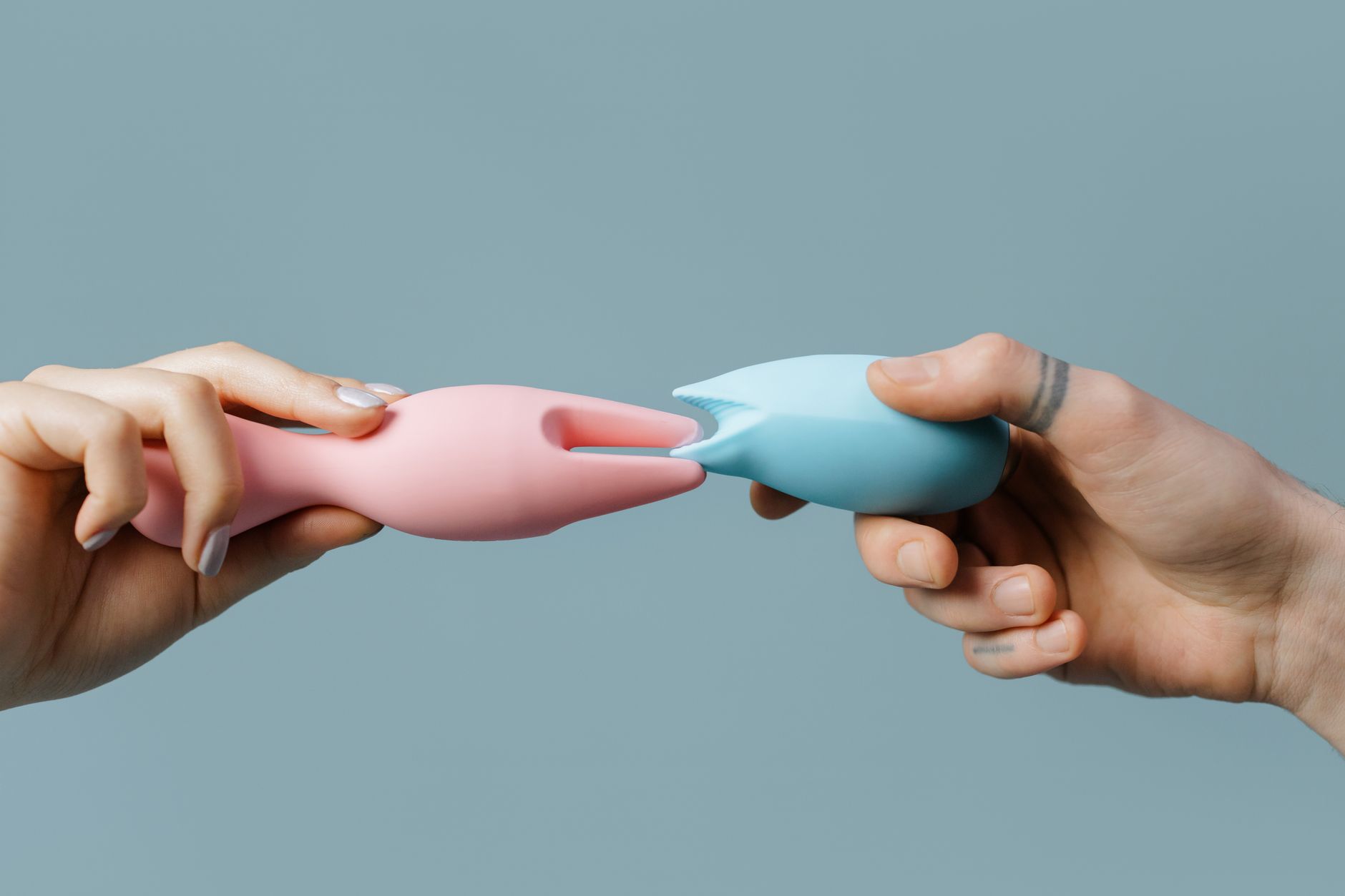
Photo by cottonbro studio on Pexels
FAQ: Desire mismatch and clitoral vibrators
Will using a lemon vibrator make me less interested in partnered sex?
No. In fact, the opposite is more common. When you have regular access to solo pleasure, the pressure on partnered sex drops. Sex with your partner becomes something you both want instead of something one person is trying to make happen. You also know your body better, which often makes coupled sex more satisfying.
Should I ask my partner's permission to use a lemon clitoral vibrator?
You shouldn't ask permission like you're doing something wrong. But you should tell them it's happening and why, and you should be genuinely curious about any concerns they have. Say "I'm thinking about doing this. How do you feel about it?" not "Is it okay if I do this?" Subtle difference. Big impact.
What if my partner feels threatened by a vibrator?
That's real and common. Fear often shows up as irritation or dismissal. Have a conversation about what they're actually worried about: Are they scared you'll prefer the vibrator? That they're not enough? That you're pulling away? Once you name the real fear, you can address it. The vibrator isn't the problem. The feeling of not being enough is. That takes reassurance and continued emotional intimacy, not just buying a different tool.
Can a lemon vibrator actually help with desire mismatch, or is it just a Band-Aid?
It's a practical solution to a specific problem: you want sex more often than your partner does. A clitoral vibrator solves that frequency gap without requiring your partner to do something they don't want. It's not fixing some broken thing about your relationship. It's meeting a legitimate need. That's not a Band-Aid. That's good problem-solving.
How do I bring this up if we've never talked about sex toys before?
Start with the truth about your desire mismatch, not the vibrator. "We want sex at different frequencies and I don't want that to create distance between us. I've been thinking about some ways to address that." Then mention the tool as one option. You're not leading with the vibrator. You're leading with the problem and the tool is the conversation about solutions.
What if my partner wants to use a clitoral vibrator too, but at different times than me?
Perfect. That's actually the win. Your partner having independent access to pleasure they want, on their schedule, is the whole point. It's not about synchronized orgasms. It's about both of you feeling good without guilt or pressure.
The bottom line
Desire mismatch isn't a sign that you chose the wrong partner. It's a normal variation in how humans work. The couples who stay connected through mismatched libidos aren't the ones who force alignment. They're the ones who talk honestly, make space for individual needs, and stop treating sex as something that has to happen on a shared timeline to count as intimacy.
A lemon vibrator is a tool. But the real work is the conversation. If you want to explore this with your partner, start there. And if you need help having that conversation, a couples therapist can make a world of difference. You deserve to feel wanted. Your partner deserves to feel no pressure. Both things can be true.
Ready to start the conversation? Reach out for guidance on navigating desire mismatches with your partner.