The problem nobody talks about
Intensity sensitivity with clitoral vibrators is genuinely common. You buy a lemon vibrator because you've heard it's revolutionary. You turn it on. Three seconds later, you're jolting back like you've touched a live wire. Your first thought: something's wrong with me. Your second thought: maybe I'm just not a vibrator person.
Neither is true. You're not broken, and you're definitely not alone. What's actually happening is a mismatch between your body's baseline sensitivity and the vibration pattern you're using.
Why sensation can feel overwhelming
Three things make vibration feel like too much. First, there's raw power. A lemon clitoral vibrator delivers focused, concentrated stimulation. Unlike manual touch, where you can vary pressure infinitely, vibration is consistent and relentless. Your body hasn't learned to absorb that yet.
Second, there's pattern shock. If you've been using something gentler, jumping to a suction device or a faster oscillation pattern can feel jarring. Your nervous system needs a runway.
Third, there's actual sensitivity. Some people have naturally higher nerve density in the clitoris. Others are coming back from numbness or medications that dulled sensation. When sensitivity returns, even moderate patterns can feel intense at first.
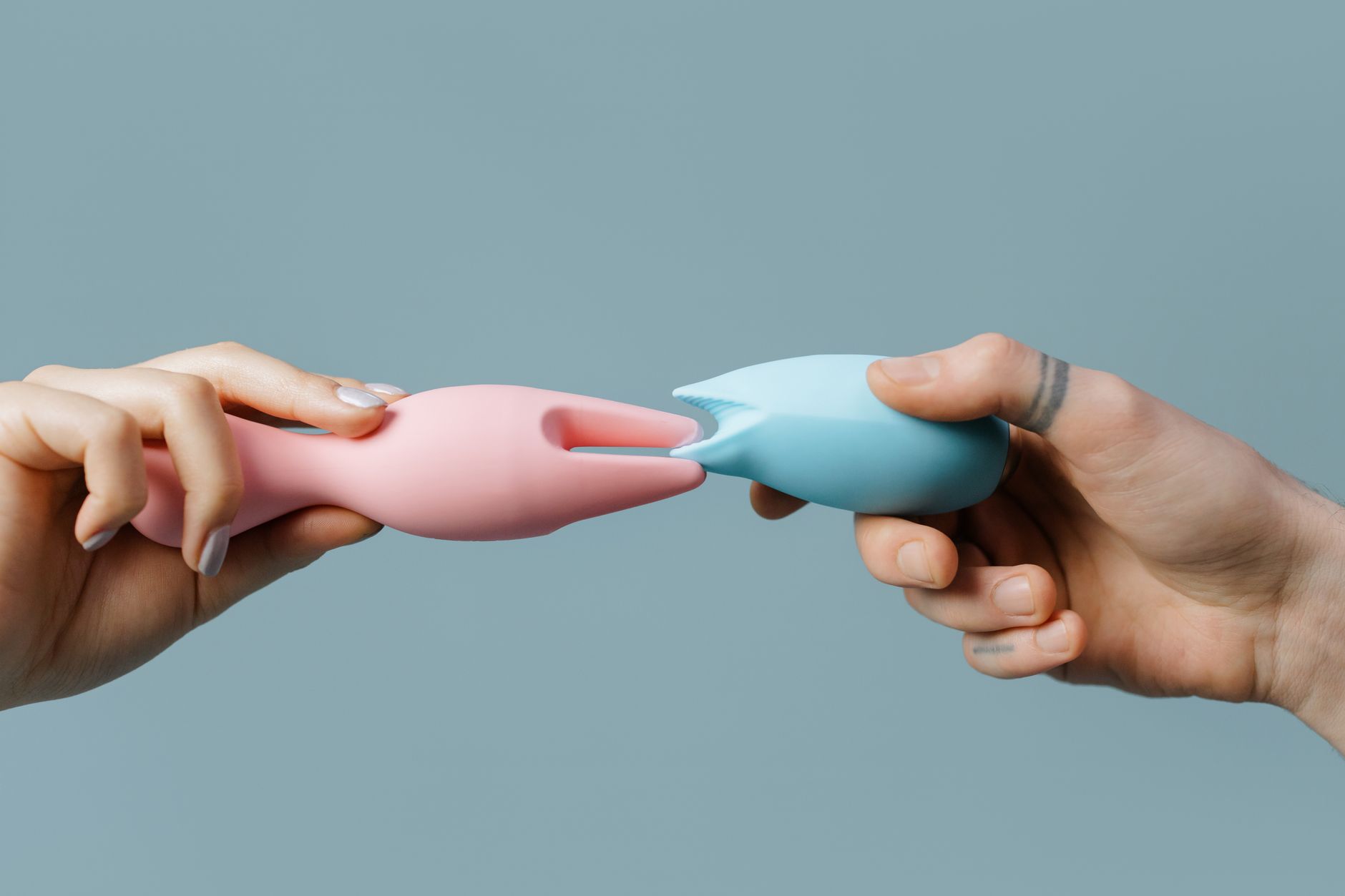
Photo by cottonbro studio on Pexels
The actual hierarchy of lemon vibrators
Not all lemon sexual toys deliver the same intensity. Understanding the difference between suction-based stimulation and traditional vibration will change how you approach this.
A lemon sucker uses pulsing air, not vibration. It creates a rhythmic squeeze and release. Many people find this less jarring than straight vibration because the sensation has a breathing quality. It's intense, but it's different.
Traditional lemon clitoral vibrators vary wildly in their lowest settings. Some brands start at a power level that's already medium. Hello Nancy's Lem, for example, has genuinely low starter patterns that won't shock your system.
The point: if you bought something and it felt overwhelming, it might not be you. It might be that particular toy.
How to recalibrate when intensity triggers you
Start with the lowest setting. Not pattern 2. Not pattern 1 with medium speed. The absolute quietest, smallest vibration your device offers. If your lemon vibrator has patterns, start with the one labeled "pulse" or "gentle." Patterns are less intense than steady vibration because they break up the sensation.
Approach it like this: turn it on, place it just outside your clitoris, on the outer labia or inner thigh. Let your body get used to the physical vibration before you bring it closer. Most people find this 30-second buffer changes everything.
Don't go directly to the clitoris. This is the mental shift that matters most. Your clitoris is sensitive for a reason. It's designed to respond to subtle input. You don't need to force it into overdrive.
Buffering: the game changer for sensitivity
Here's what nobody mentions: you don't have to use a vibrator directly on skin. Buffering sounds boring, but it's actually the secret to making intense lemon toys feel manageable.
Use a thin fabric layer between the toy and your body. A silk underwear panel, a microfiber cloth, even the crotch of a pair of tights works. This mutes the sensation by maybe 30 to 40 percent without killing it entirely. Your nervous system can handle that intermediate step.
Start with the fabric buffer on lowest setting. Spend five to ten minutes there. Once it feels warm and pleasant rather than alarming, remove the buffer and try again. You'll notice the jump in intensity, but your body's already primed.
If you're using a lemon clitoral vibrator on sensitive tissue after surgery or medication changes, buffering isn't optional. It's foundational.
The role of lubrication and arousal
Here's a counterintuitive fact: sensation feels less intense when you're already aroused. When your body is warm, your tissues are flushed, and your nervous system is primed, the same vibration that felt shocking in a cold state feels measured.
Start your session with non-vibrator touch. Use hands, a partner's hands, or your imagination. Build arousal for five to ten minutes before you introduce the toy. Your sensitivity threshold will be noticeably higher.
Lubrication matters too, even for external stimulation. A little water-based lube reduces friction and creates a gliding sensation that feels different from direct vibration on dry skin. Different doesn't mean better, but it often means less jarring.
Layering patterns instead of chasing power
When you're working with intensity sensitivity, skip the high-power patterns. Instead, stack gentler patterns together.
Use pattern 1 for two minutes. Switch to pattern 2 for two minutes. Then pattern 3. You're building a wave of sensation rather than a wall. Each pattern level feels manageable in isolation, but together they build arousal and pleasure.
This technique also keeps you from getting numb. When you stay on one pattern too long, your body adapts and stops responding. Rotating patterns keeps things fresh without requiring more intensity.
Managing overstimulation in real time
If you're mid-session and it becomes too much, you have actual options. This isn't failure.
Switch to a lower pattern immediately. Don't push through. Your body is telling you something, and listening is smarter than bulldozing.
Alternatively, pull the toy away and keep it on but just in contact, no pressure. The vibration continues, but the intensity drops dramatically. It's still stimulating, still pleasurable, just quieter.
Take a break. Pause for 30 seconds. Breathe. Your nervous system needs permission to recalibrate, and that permission comes from stopping.
Needing to dial back doesn't mean you're doing it wrong. It means you're paying attention to your body. That's actually the opposite of wrong.
Why this matters for ongoing pleasure
The goal isn't to train yourself to handle extreme intensity. The goal is to find the exact level of sensation that feels good without feeling punishing. When sensation feels numb or delayed after 40, you need building blocks, not hammers.
Many people discover that their favorite pleasure happens at low to medium settings, once they stop chasing intensity for its own sake. You're not failing at pleasure. You're learning what actually works for your body.
Over time, your sensitivity may recalibrate. As you use lemon vibrators regularly, your nervous system adapts and your baseline shifts. What felt overwhelming in week one might feel perfectly moderate in week four. That's normal, and it doesn't mean you need stronger toys. It means your body is learning.
FAQ: Managing intensity with lemon clitoral vibrators
Can overwhelming sensation mean I have a medical issue?
Sometimes, yes. If any vibration triggers sharp pain, numbness, or visible irritation, see a gynecologist. Most of the time, though, overwhelming sensation is just a mismatch between your baseline sensitivity and your toy's power. Start low, build slowly, and reassess. If it's a medical issue, you'll know because the problem persists even at the gentlest settings.
How long does it take for sensation to feel normal?
Three to five sessions, usually. Your nervous system adapts faster than you'd think. Start with buffered, low-setting sessions of 10 to 15 minutes. By your fifth time, the same setting will feel noticeably less shocking. Some people feel the shift after two sessions. Others take two weeks. Both are normal.
Should I try a different brand of lemon sexual toy if the first one feels overwhelming?
Not immediately. Try all the techniques here first: buffering, lower patterns, arousal buildup, and stepping down in real time. If you've genuinely done that work and it's still unbearable, then yes, a different brand might have a gentler baseline. But most people find they just needed a different approach, not a different toy.
Is it normal to prefer low settings on a lemon sucker versus a traditional vibrator?
Completely. Suction and vibration are neurologically different. Some people find suction less jarring because it has rhythm built in. Others find it more intense because the pattern is less escapable. You might genuinely prefer one over the other. That's not a limitation. That's data about what your body actually likes.
Can I combine buffering with lower patterns to make sensation even softer?
Yes, and this is a smart move for people with high sensitivity. Fabric buffer plus pattern 1 on lowest speed is genuinely gentle. You're not sacrificing pleasure. You're creating a baseline you can actually enjoy and sustain. Once that feels good, you have room to add intensity gradually.
What if I want intensity later but I'm starting low?
Your body will take you there. Don't skip the learning phase trying to jump ahead. The people who eventually enjoy high-intensity sensation are the ones who started by respecting their baseline. Build the foundation now. In four weeks, you'll have more options, not fewer.
The real secret
Pleasure that respects your nervous system beats pleasure that overwhelms it. When you find the right intensity level, you're not settling. You're building a sustainable, actually good sex life. The lemon vibrators and lemon clitoral vibrators you're using aren't too intense. You're just being smart about how you introduce them to your body.
Start low. Build slowly. Listen when your body speaks. If you're rebuilding pleasure after stress or life changes, this approach isn't just gentler. It's more effective. Your body will thank you.
Have questions about what intensity level actually suits you, or want personalized guidance on finding the right approach? Get in touch. We're here to help you find what works.