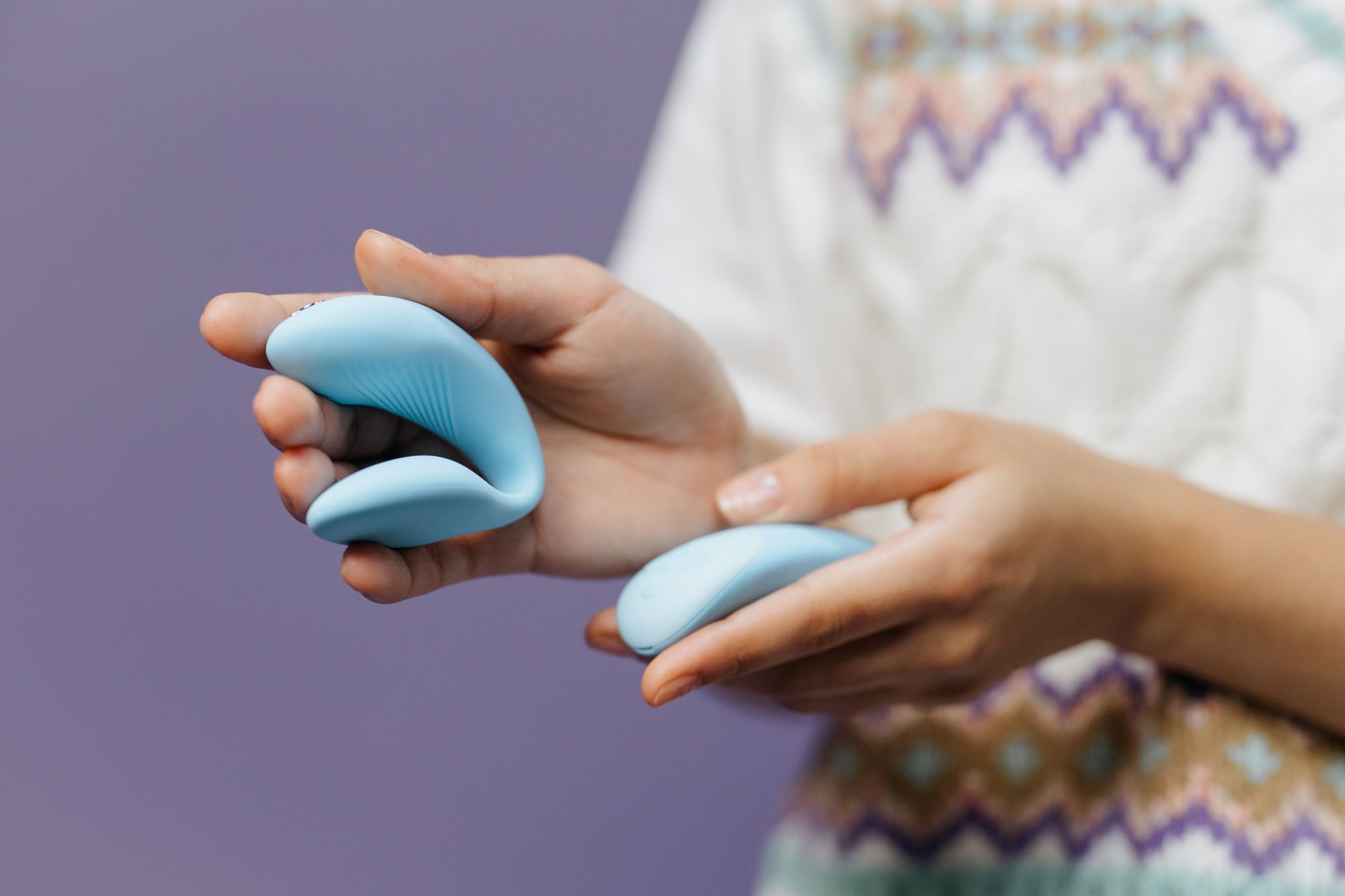
Let's talk about what actually changes
Natural lubrication shifts across your lifespan. It's not a failure of your body. It's not a signal to stop. It's just a practical adjustment, like switching from summer to winter skincare. Air suction vibrators like the Lem work beautifully with reduced lubrication if you understand how to layer in the right prep.
Here's what happens physiologically. Estrogen supports vaginal tissue thickness and moisture production. As estrogen shifts (whether from age, medications, stress, or other factors), tissues thin slightly and natural lubrication decreases. This doesn't mean pleasure decreases. It means the pathway to pleasure changes slightly.
Why air suction works better than you might think
Most people assume reduced natural lubrication is a problem for any vibrator. With clitoral suction devices, it's often not. Here's why.
Air suction stimulates the clitoris by creating gentle pressure waves, not through friction. That's fundamentally different from a traditional vibrator. Because the Lem works through suction rather than direct contact, your body's natural lubrication does less heavy lifting. You're not relying on moisture to create smooth gliding motion. You're creating micro-pressure patterns that nerves respond to regardless of wetness levels.
This is actually one reason many people report better orgasms with air suction as they age. The stimulation is more focused, less dependent on conditions, and less likely to cause irritation from friction.
The pre-session setup that changes everything
When natural lubrication is lower, three things shift in your prep routine.
Start earlier in your day or cycle. Lubrication levels fluctuate. Many people find they're higher in the morning or at certain points in their cycle (if still cycling). Pay attention to when your body feels most naturally ready, and schedule exploration time then. This isn't forcing anything. It's working with your body's rhythms instead of against them.
Add warmth before you start. Blood flow increases lubrication and tissue responsiveness. Spend 10-15 minutes doing something that warms you up and relaxes your nervous system. That might be a shower, exercise, sunlight, or simply lying in bed under a blanket with your partner or with something you find pleasurable to read or watch. The goal isn't to rush into arousal. It's to get your body into a state where arousal can build easily.
Use water-based lubricant, even if you think you don't need it. This is the non-negotiable part. When lubrication is lower, adding external lubrication isn't a weakness. It's smart biomechanics. A small amount of quality water-based lubricant around the clitoris creates a seal that helps the suction function more effectively and comfortably. You're not trying to create slickness. You're creating the conditions for the lemon vibrator to work at its best.
How to apply lubricant for air suction
Here's where most people get it wrong and then assume air suction doesn't work for them.
Don't apply lubricant directly inside the device. Apply a small amount (think: a rice grain to a pea size) to the outer vulva, specifically around the clitoris. The seal happens between your skin and the cup opening, not inside the cup. Too much lubricant breaks the seal. The right amount supports it.
If the Lem isn't holding suction or feels loose, the first thing to check isn't the toy. It's whether you've got the angle right and whether there's enough (but not too much) moisture to create the seal. A tiny amount more lubricant often fixes what people think is a device problem.
Pressure and pulsing adjustments
When tissues are more delicate or sensitive due to reduced lubrication, the way you use the device might shift slightly.
Start at lower suction levels. The Lem has different intensity settings. If you normally use level 3 or 4, begin at level 1 or 2. Your tissues will be more sensitive to pressure when lubrication is lower, which actually means you might find even more intense sensation at a technically lower setting. It's counterintuitive, but real.
Experiment with pulse patterns rather than constant suction. Many lemon clitoral vibrators offer rhythm options. If continuous suction feels intense or uncomfortable, try a pulsing or wave pattern. These can feel more comfortable and often build to orgasm more gradually, which many people prefer as tissues become more delicate.
Shorten your session initially. Instead of a 20-minute exploration, try 10-12 minutes the first few times. This protects sensitive tissue and helps you recalibrate what feels good. You can always extend once you know how your body responds.
The timing question with partners
If you're using a lemon vibrator with a partner, the timing shift is sometimes the biggest adjustment.
When natural lubrication is lower, your body might take longer to be ready for penetration (if that's something you do). This doesn't mean you're less interested or that the vibrator won't work. It means the sequence matters more. Many couples find that using air suction before penetration actually improves the experience because the clitoris is already activated and responsive, and that activation helps other tissues prepare too.
Alternatively, some people find they prefer focusing on clitoral pleasure entirely and skipping penetration that day. That's also completely fine. Pleasure doesn't have a required shape.
When to suspect something beyond lubrication changes
If you're experiencing pain (not just discomfort or unfamiliar sensation, but actual pain), that's worth checking in with a healthcare provider about. Genitourinary syndrome of menopause (GSM) is real and treatable. Some people benefit from topical estrogen or other approaches that a specialist can discuss.
If sensation feels totally numb or absent even after adjusting technique and prep, that might point to medication side effects, neurological changes, or other things worth exploring with a doctor. But reduced natural lubrication alone? That's almost never a reason to stop exploring pleasure.
What doesn't need to change
Your capacity for pleasure is not diminished. The neural pathways are still there. Your clitoral nerve density hasn't changed. Your ability to experience intense sensation and orgasm is intact.
What changes is the mechanical setup. When you adjust for that, pleasure often becomes more reliable and more intense, not less. Many people report their most satisfying experiences come after they learn to work with their body's current state rather than fighting it.
If you're new to air suction vibrators and considering trying a lemon clitoral vibrator specifically, reduced lubrication is actually not a reason to hesitate. Air suction is often easier to use and more comfortable than traditional vibrators in this situation. Start with the right prep, use a small amount of lubricant, and give yourself permission to adjust pressure and pacing. The device will do the work. Your job is just to show up and be patient with yourself.
People also ask
How much lubricant should I use with a lemon vibrator if I have reduced natural lubrication?
Start with a very small amount. Think of it as priming the seal, not coating the area. A grain-of-rice-sized amount around the clitoris is usually enough. You can always add a bit more if the suction feels weak, but most people use far too much initially, which breaks the seal and defeats the purpose. Water-based lubricant is essential here because it's compatible with silicone toys and washes away easily.
Does reduced lubrication mean I can't have an orgasm with air suction?
Not at all. In fact, many people find air suction easier to orgasm with when lubrication is lower, because the stimulation doesn't depend on friction and gliding motion the way traditional vibrators do. The seal and suction create pressure waves that work regardless of moisture level. Adjust your prep and technique, and most people find orgasm is still very much possible.
Can I use silicone lubricant instead of water-based with a lemon clitoral vibrator?
No. The Lem is made from silicone, and silicone lubricants can degrade silicone toys over time. Stick with water-based lubricant. It's compatible, effective, and much easier to clean up afterward.
How long should I wait after starting lubricant-based preparation before using the vibrator?
There's no wait required. Once you've applied a small amount of water-based lubricant, you can start immediately. The point isn't to soak the area. It's to create the right conditions for suction to work smoothly. If anything, starting right away means the lubricant hasn't dried out yet.
Should I use more lubricant if I'm using the Lem for longer sessions?
Sometimes, yes. If you're planning a longer exploration and notice the suction feeling slightly weaker midway through, you can add a tiny bit more. But most people find that once the seal is established, they don't need to add more. If you're finding you need frequent re-applications, it might mean you're using too much initially or the angle needs adjustment.
Does reduced natural lubrication mean I should avoid air suction and use a different type of vibrator?
Actually, the opposite is often true. Air suction vibrators are frequently more comfortable and effective when lubrication is lower because they work through pressure rather than friction. If you've been hesitant about trying a lemon sucker or similar device, reduced lubrication isn't a reason to avoid it. It's often a reason to try it.