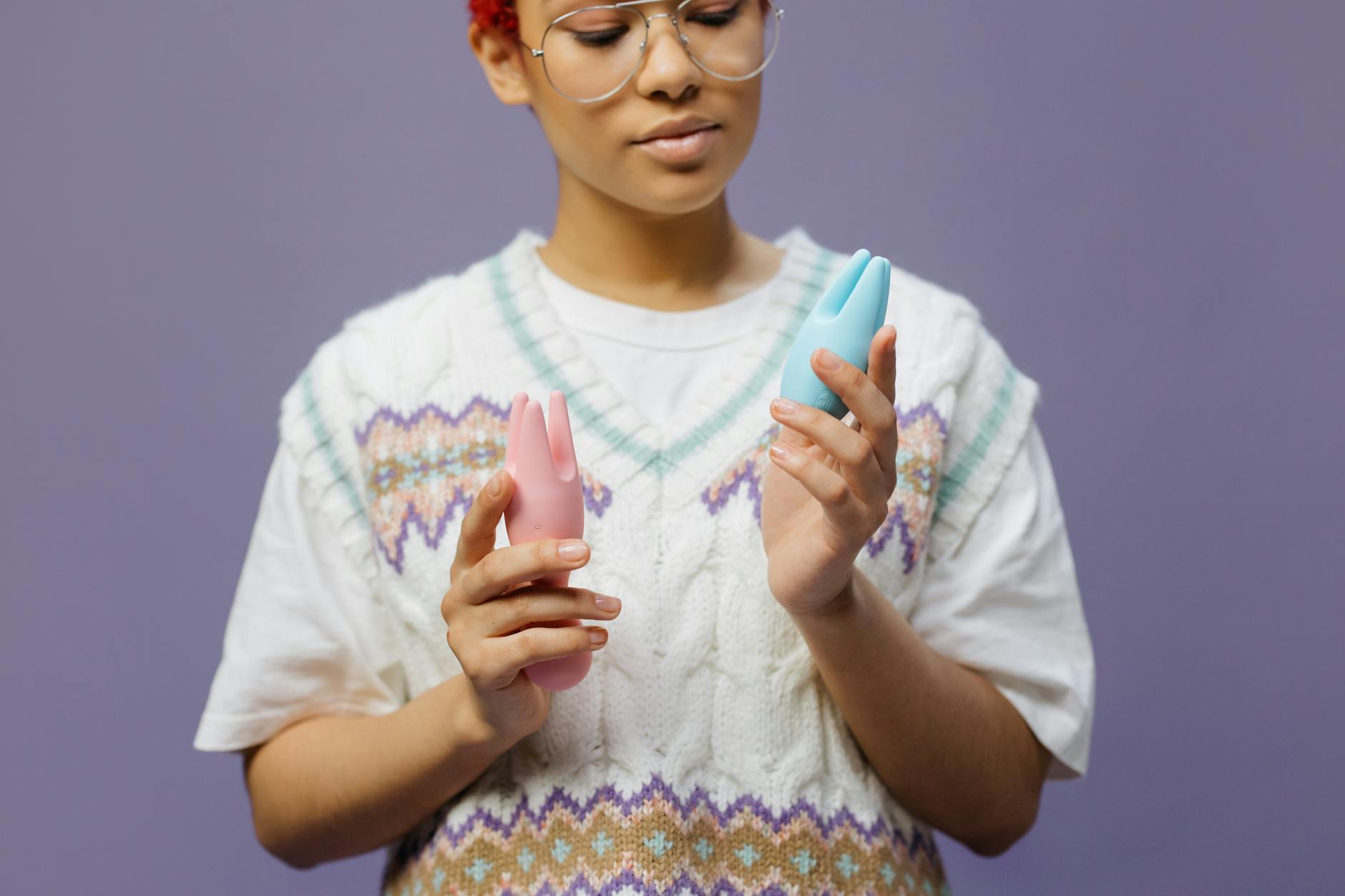
Here's what nobody tells you about depression and sex
Depression doesn't kill your nerve endings. It kills your reasons. Your body can absolutely still feel pleasure, still respond to touch, still have an orgasm. But the gap between knowing that and actually wanting to close that gap gets wider every day.
I've worked with hundreds of people navigating this exact disconnect. Most say the same thing: "I know I should want this. I know it might help. But the thought of trying feels impossible."
That's not laziness. That's depression doing what it does best.splitting the wires between desire and capacity.
Why depression specifically kills sex drive
Depression shrinks your world. Neurologically, it dampens dopamine and serotonin, the neurotransmitters that create anticipation and reward. Sex is supposed to feel rewarding. When your brain chemistry can't register reward, it stops making the case for trying.
But here's the part that matters: your clitoris doesn't know about your dopamine levels. Your nerve endings don't read your mood. They can still fire. You can still orgasm, sometimes intensely, even when you feel nothing.
This gap between capacity and motivation is where lemon vibrators become genuinely useful. Not because they fix depression. But because they lower the friction between "I can feel pleasure" and "I'm willing to try."
Air suction technology, like the Lem vibrator, requires less mental activation than traditional vibrators. It builds sensation gradually. It doesn't demand the same kind of present-moment focus that depression makes almost impossible.
The practical barrier depression creates
Depression isn't just sadness. It's exhaustion. Initiative becomes a project. Pleasure feels like a task.
When I talk to clients about sex during depression, they describe these obstacles.
The mental load. Your brain is already running on empty. Adding "figure out what you want," "set up the right environment," "get in the right headspace" feels like a second full-time job.
The shame spiral. You know sex might help. You know it might improve your mood, your relationship, your sense of self. Not wanting it becomes evidence that you're broken. That spiral kills more desire than depression itself.
The body disconnect. Depression lives in your body. Numbness, heaviness, tension. Activating pleasure pathways means first noticing your body, which depression makes unbearably hard.
The partner complexity. If you have a partner, their needs add another layer. Now it's not just about you. Now it's about disappointing them, managing their frustration, performing health you don't have.
That's where I usually suggest starting smaller.
How lemon clitoral vibrators fit into depression recovery
Let me be direct: a lemon sucker or air suction vibrator won't cure depression. Therapy does that. Medication helps. Time and support do the heavy lifting.
But a lemon clitoral vibrator can lower the activation energy for pleasure. It can create small moments of reclamation when everything feels reclaimed by depression.
Here's why they're particularly useful for depression specifically.
They don't require much mental presence. The Lem vibrator's suction technology is self-contained. It doesn't need you to think about friction, pressure, rhythm. You turn it on and it works. Depression makes complexity feel like cruelty. This is not complex.
Sensation builds gradually. Depression makes intensity feel hostile. You're already overwhelmed. Sudden, sharp sensation can feel destabilizing. Lemon vibrators build sensation in waves. You can start at level one and stay there, or move up slowly, on your timeline.
They create a small anchor to your body. Pleasure, even small pleasure, reminds you that your body still exists. That it still works. That some part of you is still you. Depression tries to convince you none of that's true anymore.
Success is low-pressure. You don't have to orgasm to "succeed." You don't have to feel anything dramatic. If you use it for five minutes and feel slightly less numb, that's a win. Depression thrives on all-or-nothing thinking. This removes that.
The actual process: how to start
If you're depressed and considering exploring pleasure again, this is how I usually suggest framing it.
Step one: Separate the action from the narrative. Using a lemon vibrator is not a sign you're "getting better." It's not a test of your depression. It's just trying something. You're allowed to try something without it meaning anything about your recovery trajectory.
Step two: Remove the performance pressure. You don't have to do this for anyone. Not for a partner, not to prove you're healing, not to meet some timeline. This is just for you. And if you stop, that's fine too.
Step three: Choose a really low-friction moment. Not when you "should" be aroused. Not right before bed when you're exhausted. Maybe it's a quiet afternoon when you have genuinely nothing else to do. Maybe it's a moment when depression feels slightly less heavy.
Step four: Start with sensation, not outcome. Don't go in thinking "I want to orgasm." Go in thinking "I want to notice what this feels like." That distinction matters. Outcomes are demands. Sensation is just information.
Step five: Stop whenever it feels wrong. Depression will sometimes hijack pleasure and turn it into another way to feel broken. If that's happening, stop. There's no failure here. You tried.
When to bring a partner into this
If you have a partner, this gets more complicated. They might feel rejected when you're not interested. They might feel relieved if you're trying anything. They might feel confused about what's happening.
I usually recommend this conversation: "I'm not interested in sex right now, and I'm not sure when that will change. But I'm going to try using something solo. This isn't about you. This isn't rejection. This is me trying to find my way back to my body."
That honesty doesn't solve their hurt. But it removes the guessing. Many partners are relieved to know you're still interested in pleasure, even if the shape of it has changed temporarily.
Some partners want to participate. That's worth discussing separately. Solo exploration often comes first for depression specifically. It lets you reconnect with your body without performance pressure.
The medication question
Many antidepressants mess with sex drive as a side effect. SSRIs are notorious for this. If you're on medication, it's worth a conversation with your prescriber.
But here's the thing: sometimes the medication-induced side effect is better than the depression's effect. A medicated person with lower sex drive often has more motivation to explore pleasure than an unmedicated person drowning in anhedonia.
If your medication is tanking your drive, your doctor might adjust the dose, switch timing, or change the medication entirely. Don't just live with it thinking you have to. But also don't avoid medication because you're scared of this side effect. Depression's effect on sex drive is worse.
When to call for help
If pleasure feels impossible even with these strategies, that's information. That usually means the depression is still winning the neurochemistry battle. You probably need to adjust treatment.
Talk to your therapist or doctor about this. Not as "I'm broken," but as "This is a symptom I'm tracking." They need to know.
If depression is paired with suicidal ideation, please reach out to a crisis line or your mental health provider immediately. This goes beyond lemon vibrators.
If pleasure feels tainted by trauma or significant anxiety, a trauma-informed sex therapist is worth the investment. Depression plus trauma has its own shape. You deserve someone who understands both.
The slow rebuild
Depression doesn't usually lift all at once. Neither does desire. But small moments of reclaiming your body matter. A minute of gentle sensation. An orgasm that catches you by surprise. A moment where you remember that pleasure is still possible for you.
Those moments don't fix depression. But they remind you that you're still in there. That your body is still yours. That recovery includes pleasure, not just the absence of pain.
A lemon clitoral vibrator is just a tool. But sometimes when you're depressed, even small tools feel like permission slips. Permission to try. Permission to rebuild slowly. Permission to want things again, on your own timeline.
Questions people ask about depression and pleasure
How long before interest comes back? It depends on the depression and the treatment. Some people see shifts in weeks. Some take months. Some take years, and then one day it's just there again. There's no normal timeline. Your therapist can help you track what's actually improving versus what depression is telling you is permanent.
Can masturbation help depression? Organisms release endorphins and can improve mood short-term. But if you're severely depressed, forcing yourself to have sex (with yourself or someone else) can backfire and create more shame. Start with gentle exploration, not pressure.
Will my partner resent me for losing interest? Some will. Some won't. Good partners understand that depression isn't a choice. Better partners understand that you're still interested in them, just not in sex right now. If your partner can't hold that space, that's a separate relationship problem that therapy can help clarify.
Is it normal to orgasm but feel nothing? Completely normal with depression. You can have all the physical responses and feel like you're watching from outside your body. That's dissociation, and it's a common depression symptom. It doesn't mean you're broken. It means the depression is that strong right now.
What if I use a lemon vibrator and feel worse? Stop using it. Pressure to feel pleasure when you're depressed can deepen shame. That's not failure. That's information. Some people need to wait until depression lightens a bit before pleasure-seeking feels safe. That's okay.
How do I know if this is depression or just low libido? If it came suddenly, if it's paired with other depression symptoms (sleep changes, appetite changes, fatigue, hopelessness), and if it's happened before during depressive episodes, it's probably depression-related. If it's chronic and not tied to mood shifts, it might be something else worth exploring with a healthcare provider.
The thing about pleasure in recovery
Pleasure isn't the cure. But it's part of reclaiming yourself. Every time you notice sensation, every time your body responds to something, you're telling depression: "I'm still here. This still works. I still matter."
A lemon vibrator won't fix that. But it gives your body permission to try. And sometimes, when depression is screaming that everything is impossible, permission to try is exactly what's needed.
If you're struggling with depression and want to talk through what might work for you specifically, reach out to a therapist or contact us at Hello Nancy Official. You're not alone in this, and you deserve support.