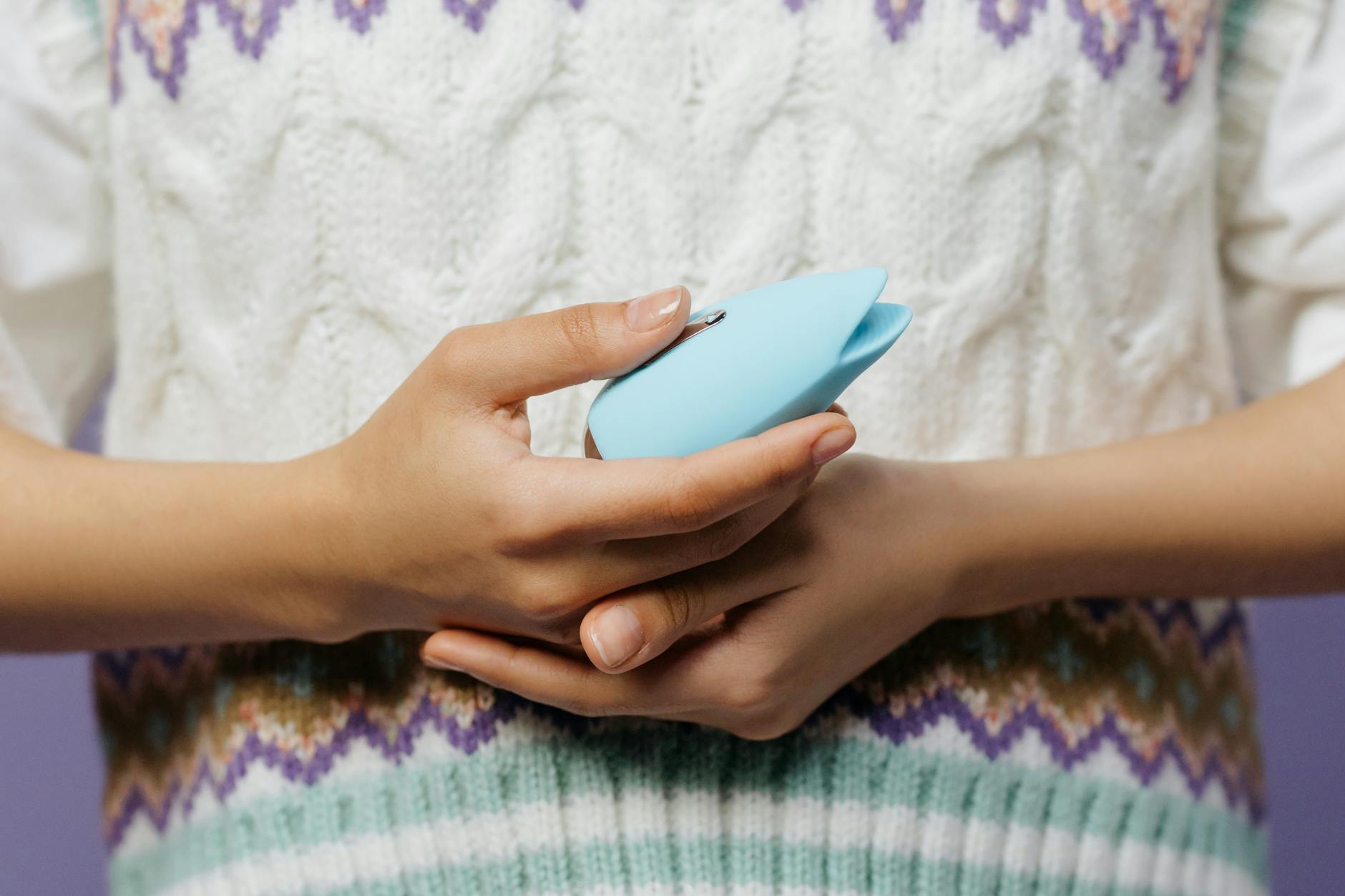
When relationship tension kills your desire
You know the feeling. After weeks of unresolved tension, arguments that didn't land right, or just the slow suffocation of emotional distance, your libido vanishes. It's not that you don't love your partner. It's that your nervous system is in guard mode. Desire requires safety. Stress shuts it down completely.
What happens next matters more than you think. Many people wait for the relationship to feel perfect again before touching themselves or allowing pleasure back in. That's backward. Pleasure is what rebuilds the nervous system. It's not the reward for fixing things. It's the tool that helps you fix them.
Why desire drops after relationship conflict
This is biology, not failure. When you're in conflict with a partner, your brain floods with cortisol and adrenaline. Your body is primed for threat, not intimacy. The vagus nerve, which regulates arousal and safety, gets stuck in sympathetic overdrive. You're literally not able to feel turned on because your system doesn't feel safe enough yet.
The problem is that waiting for your partner to "make it right" keeps you stuck. You're asking someone else to regulate your nervous system. That's not how it works. You have to come back to baseline yourself. And the fastest way to do that is through your own pleasure.
Here's the counterintuitive part: using a lemon vibrator alone after conflict isn't selfish or a sign that your relationship is broken. It's exactly how you signal to your body that you're safe again. It's literally a form of nervous system reset.
Why lemon vibrators work better during low-desire periods
When your libido is depressed, traditional vibrators often feel like too much. They demand intensity. They ask for things you're not ready to give yet. Lemon clitoral vibrators work differently. The suction pattern is gentler than direct vibration. It doesn't require the same mental focus or physical readiness that friction-based toys demand.
Think of it this way: a lemon vibrator says "just feel this." It doesn't ask you to perform or build to a particular goal. The sensation is almost meditative. You can put it on the lowest setting and simply breathe. That matters when your nervous system is still tender.
The other advantage is that suction-based stimulation, like what the Lem provides, engages deeper nerve clusters. You get significant sensation without needing heavy pressure. When you're in recovery mode, that's crucial. You want your pleasure to feel safe and achievable, not like another demand.
Starting with your body, not your relationship
Here's where most advice goes wrong. People tell you to "reconnect as a couple." That's the end goal, not the start. The start is you reconnecting with yourself. That means solo time with a lemon vibrator is not a detour. It's the bridge.
Set aside 20 to 30 minutes when you're alone. Don't make it about outcomes. Don't aim for an orgasm. That pressure kills the whole point. Instead, approach it as a nervous system experiment. You're teaching your body that pleasure is still available. You're proving to yourself that you can feel good even while things are tender with your partner.
Start with settings one or two on a lemon clitoral vibrator. Let the sensation be subtle at first. Your goal is to practice staying present. When your mind goes to the conflict (and it will), gently bring it back to the physical sensation. This is meditation with a side of pleasure.
After three to four sessions, your system will relax. You'll notice your body responding faster. Your nervous system is remembering that safety exists. That's when you can turn up the intensity if you want to.
Rebuilding desire together, step by step
Once you've spent a week or so reconnecting with your own pleasure, you have something valuable to bring to your partner. You've proven that pleasure is still possible. You've rebuilt some of your own neurological baseline. Now intimacy becomes less about fixing the relationship and more about both of you choosing to show up.
If your partner is open to it, show them your lemon vibrator. Not as a replacement for them, but as a tool that's helping you both. You might use it together while they stimulate you in other ways. The Lem's gentle suction pairs beautifully with manual touch. Your partner can be present, engaged, and part of the experience without it feeling like yet another thing they have to "fix."
This shifts the energy. Instead of sex being about repairing damage, it becomes about both of you exploring pleasure together. That's healing work.
When low desire is a signal, not a symptom
Here's something important: sometimes low desire after conflict isn't just stress. Sometimes it's your body telling you something real. If you use a lemon vibrator solo and you still feel nothing, that's information. It might mean the conflict goes deeper than you thought. It might mean you need real conversation, not just pleasure practice.
Low desire can be your body's way of saying "this relationship isn't safe yet." If that's the case, no toy is the answer. What you need is actual repair work with your partner or a couples therapist. A lemon vibrator is a tool for recovery, not a substitute for genuine connection.
But most of the time, especially in solid relationships hit by normal tension, what's happened is just that your nervous system got stuck. Pleasure practice unlocks it.
The role of patience and exploration
Don't expect to feel like yourself immediately. Desire rebuilds gradually. You might have sessions where a lemon vibrator does nothing, and sessions where it feels transformative. Both are normal. Your nervous system is learning to trust pleasure again. That takes time.
Use those early sessions to explore different patterns. Most lemon vibrators have five to eight settings. Spend a week trying them all without judgment. Notice which ones feel best in your body right now. That changes. What felt good last month might feel wrong this week. Your job is just to pay attention.
After a few weeks of solo reconnection, most people notice their desire returning. It might not come back the way it was before the conflict. It might be softer, more intentional, less automatic. That's actually healthier. You're moving toward desire that's grounded in choice, not just biology.
Reintegrating pleasure back into your relationship
Once you've rebuilt your own baseline, bringing a lemon vibrator into partnered time becomes a natural evolution. You're not introducing it as a band-aid for problems. You're introducing it as something that's been helping you feel good, and you want to share that.
This conversation is important. Tell your partner what you've noticed. "When things were tense, I couldn't feel anything. Using a lemon vibrator alone helped my body remember how to feel pleasure again. I'd like to explore that together sometimes." That's honest, vulnerable, and clear.
Some partners will be excited. Some will need time to sit with it. Both reactions are okay. What matters is that you're not hiding the tool that's helping you heal. Transparency builds the safety that low desire has eroded.
When to reach out for more support
If you're three weeks into solo pleasure practice and you still feel completely numb, talk to someone. A therapist who specializes in sex and relationships can help you figure out if what you're experiencing is normal stress recovery or something more complex. Some medications, past trauma, or deeper relationship issues can keep desire suppressed even when you're using the right tools.
There's also a difference between low desire and no desire. Low desire is "I'm interested but my body is sluggish." No desire is "I feel completely disconnected." A lemon vibrator can help with the first. The second usually needs more support.
FAQ
Can using a lemon vibrator alone make my relationship problems worse?
Not if you're transparent about it. The secrecy would be the problem, not the tool itself. Most partners actually feel relieved when they learn that their significant other is working on reconnecting with pleasure. It takes pressure off them to be the sole source of all your good feelings. If you're worried about how your partner will react, that conversation itself might be worth having with a therapist first.
How long before my desire comes back after relationship stress?
Usually two to four weeks if you're doing consistent solo practice. But "back" doesn't always mean identical to how it was. Sometimes stress-recovery desire is quieter and more intentional than pre-conflict desire. That's not worse. It's just different. Pay attention to your own pattern rather than expecting a specific timeline.
Is it normal to not orgasm with a lemon vibrator when you're stressed?
Completely normal. Orgasm requires a certain level of nervous system relaxation. When you're in stress recovery, your body might not be ready for that yet. That's why starting with lower settings and no outcome goals matters so much. You're teaching your system that pleasure exists without having to perform.
Should I tell my partner I'm using a lemon vibrator if we're having relationship problems?
Eventually, yes. Not as a confession, but as part of rebuilding trust and communication. You might start by saying "I'm working on reconnecting with my body while things feel tense between us." You don't have to lead with the specific tool. But keeping it secret sends a message that pleasure is something to hide, which reinforces the shame cycle that low desire creates.
Can my partner use a lemon vibrator on me if we're trying to rebuild desire?
Absolutely. Once you've spent time solo, inviting your partner to be part of the experience can deepen reconnection. They can hold it, control the intensity, and be present while you practice feeling good together. This often helps rebuild the emotional intimacy that conflict erodes, because it's collaborative rather than combative.
What if using a lemon vibrator makes me feel guilty?
That guilt is worth exploring, ideally with someone trained in sex-positive therapy. Guilt around pleasure often comes from old messages about what's "allowed" in relationships or what's "appropriate." Pleasure in a committed relationship is not a betrayal. It's a practice. Healing guilt is about recognizing that your body and your desires belong to you first, and sharing that with a partner is a choice, not an obligation.
Relationship stress is a common cause of low desire, but it doesn't have to mean your libido disappears permanently. Using a lemon vibrator to reconnect with your own pleasure isn't a detour from your relationship. It's the most direct path back to yourself, and that's what your relationship actually needs. Your partner doesn't need you to be fixed. They need you to feel good again. Start there.