How to Use Lemon Vibrators for Better Pleasure When You're on SSRIs
Let's be real. SSRIs are often necessary, sometimes life-saving, and they come with a sexual side effect that nobody warns you about in the pharmacy.
About 40 to 60 percent of people on selective serotonin reuptake inhibitors report some change in sexual function. That's not a small number. It's not a quirk. It's a direct neurochemical consequence of how these medications work in your brain. And here's what makes it worse: most doctors dismiss it. "It should pass," they say. "Try not thinking about it," they suggest. Both pieces of advice are wrong.
What I've learned after years of working with couples navigating this is that lemon vibrators and other clitoral sucking toys respond to SSRI-changed bodies very differently than traditional vibrators do. Understanding why changes everything.
How SSRIs affect arousal and orgasm
SSRIs work by increasing serotonin availability in your brain. This is excellent for mood regulation and anxiety. It is not excellent for sexual response.
Here's the mechanism: serotonin dampens dopamine signaling in the reward pathways that fuel desire. Lower dopamine means less motivation to seek out pleasure. Your brain doesn't get the same chemical urgency to respond to stimulation. Simultaneously, SSRIs can reduce genital sensitivity by blunting the neural signals that register touch. The result is a kind of double hit. Desire drops. Response time stretches. Orgasm becomes harder to reach.
What most people don't know is that this effect is dose-dependent and medication-specific. Some SSRIs (sertraline, paroxetine) carry higher sexual side effect risk than others (bupropion, which isn't technically an SSRI, has the lowest reported rate). But across the board, if you're on an SSRI, your baseline for pleasure has shifted.
Why traditional vibrators stop working
A conventional bullet or wand vibrator relies on intensity and direct friction to bypass the neural dampening that SSRIs create. You crank up the power to compensate for reduced sensitivity. But here's the problem: this approach burns through sensation without building it. You're using force instead of precision.
Suction-based toys like lemon clitoral vibrators work on a totally different principle. Instead of numbing through repetitive vibration, they create a rhythm of pressure and release that mimics the natural building blocks of arousal. This matters on SSRIs because suction engages different nerve pathways than vibration alone.
The clitoris has thousands of nerve endings, but not all of them respond equally to vibration. Suction stimulates the broader tissue structure in a way that activates deeper nerve bundles that SSRIs haven't completely silenced. It's not about brute force. It's about leverage.
The specific way lemon vibrators adapt to SSRI bodies
When you're on an SSRI, your arousal timeline expands. What used to take 5 minutes now takes 20. What used to escalate smoothly now has plateaus. A lemon clitoral vibrator meets this shifted timeline differently than a traditional toy.
The suction patterns on a lemon vibrator allow you to start at very low intensities without feeling like nothing's happening. Pattern 1 on most suction devices feels like a whisper against traditional vibration's jackhammer. You can sustain that whisper for longer without fatigue or overstimulation. This matches the neurochemistry of SSRI bodies better. You're building sensation gradually instead of trying to blast through numbness.
Second, suction devices have a built-in pause rhythm. The pressure releases periodically, which gives your nervous system time to register sensation between pulses. This pulse-and-rest pattern activates what's called the accumulation effect. Each cycle builds on the last one. On SSRIs, where your baseline sensitivity is reduced, this cumulative approach works better than constant high-frequency vibration.
Third, the physical design of lemon vibrators creates focused stimulation on the external clitoral body without requiring as much genital contact to feel effective. This matters because SSRI-affected bodies sometimes experience pressure sensitivity. A broad contact surface can feel uncomfortable. Suction concentrates sensation precisely.
Practical timing and technique adjustments
If you're on an SSRI and using a lemon vibrator (or any clitoral vibrator), here's what I recommend:
Start 10 to 15 minutes earlier than you would have before the medication. Don't try to force arousal on the old timeline. Your body isn't broken. It's on a different schedule. Extending warm-up time feels counterintuitive when sensation is already muted, but the research is clear: more time, not more intensity, produces better outcomes on SSRIs.
Begin on the lowest pattern setting. Spend at least 5 minutes there, even if it feels too subtle. This isn't foreplay. This is nervous system priming. You're teaching your body to register sensation again at low volume.
Then, instead of jumping to high intensity, move through the mid-range patterns one pattern per minute. Don't skip. The gradual escalation works. I know it feels slow.
If you're partnered, communicate this timeline shift explicitly. "I need longer" is not the same thing as "I want you less." Most partners assume delay means disinterest. It doesn't. But if you don't name it, the miscommunication spirals.
When to talk to your prescriber
Not all SSRI sexual side effects are permanent fixtures. Some people adjust after 6 to 8 weeks. Others don't. If you're several months in and nothing's changed, your doctor has options.
One: switching to a different SSRI or adding bupropion (which counteracts the sexual side effects of SSRIs). Two: adjusting your dose or timing. Taking your dose right after orgasm instead of before can reduce impact. Three: taking a planned "drug holiday" if your doctor agrees it's medically safe, though this only works for short-acting SSRIs and requires professional guidance.
The point is, sexual side effects are not a moral failing or a sign you need to accept diminished pleasure forever. They're a known pharmacological effect with solutions. Most doctors just don't bring it up unless you do.
The emotional layer that matters as much as the physical
Here's what I see constantly in my practice: people on SSRIs internalize delayed orgasm as personal failure. "My body's broken," they tell themselves. "I'm not attracted to my partner anymore." Neither is true.
Your brain chemistry has shifted. That's a fact. It's not a reflection of your desirability or your relationship. But if you treat it like a personal rejection, your partner will too. Anxiety about performance then dampens arousal further, creating a feedback loop where SSRI-flattened desire becomes compounded by emotional pressure.
The antidote is radical honesty and curiosity, not resignation. "I'm on medication that affects arousal. Here's what helps. Let's figure this out together." That's a completely different conversation than suffering in silence.
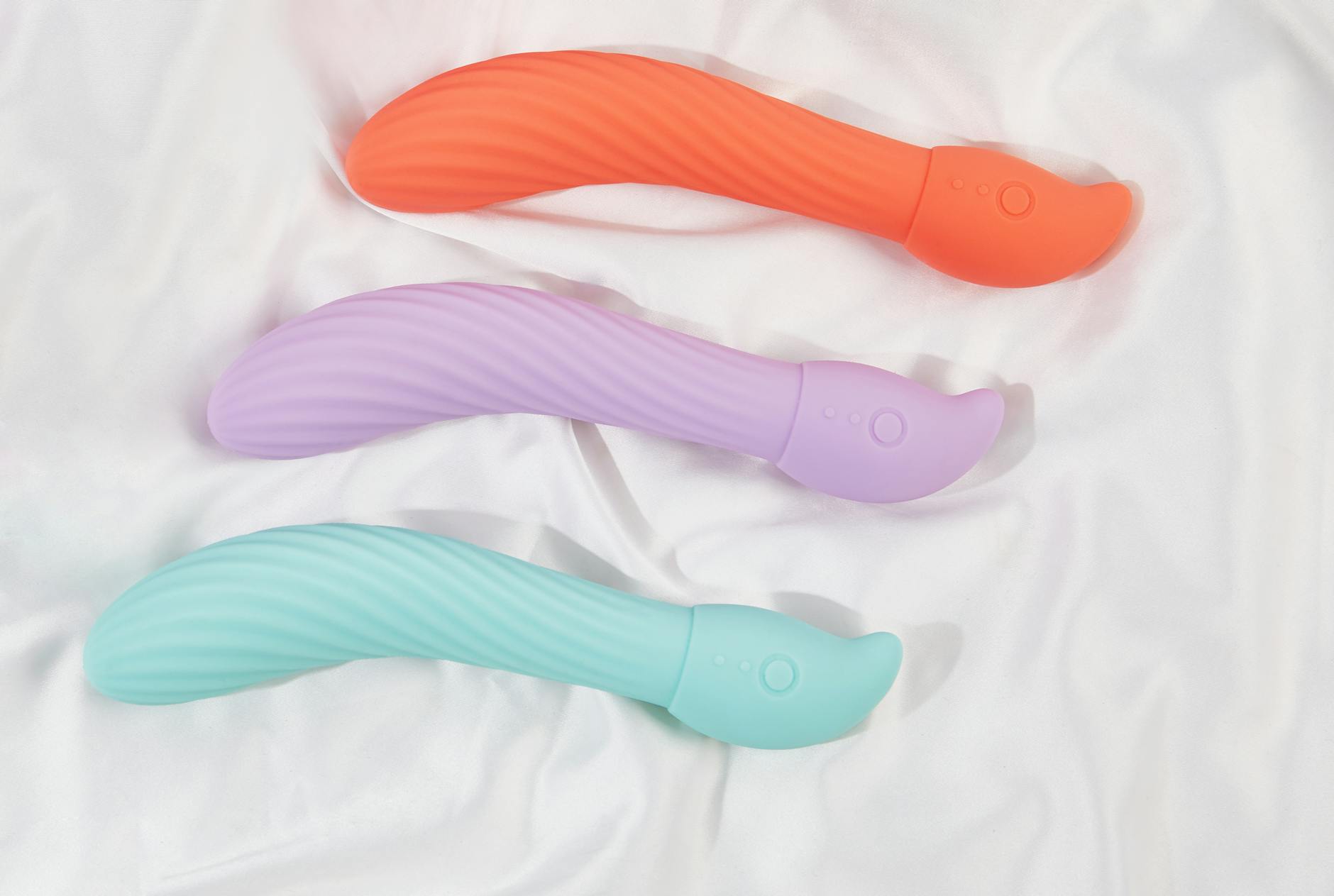
Photo by IFONNX Toys on Pexels
Other tools that pair well with lemon vibrators on SSRIs
Lubrication becomes even more important on SSRIs because arousal-related natural lubrication often decreases alongside sensitivity. Water-based lube should be your baseline, not an occasional accessory.
Fantasy or written erotica can help because SSRIs particularly dull the dopamine reward pathways for desire. Engaging your imagination before you start physical stimulation can prime those pathways. It's like warming up before exercise.
Pelvic floor awareness exercises (not aggressive Kegels, but gentle tension-and-release work) help because SSRIs can increase baseline pelvic floor tension. A tense pelvic floor blocks sensation. Learning to consciously relax it changes everything.
Couples who've had success often find that manual stimulation followed by a lemon vibrator works better than the vibrator alone. Your partner's touch carries different neurological signals than a toy. Combining them layers the sensory input.
FAQ: Lemon Vibrators and SSRIs
Will my sexual response go back to normal if I stop taking my SSRI?
Sometimes, yes. If you discontinue the medication (under your doctor's guidance), sexual function often returns within a few weeks to a few months. But this doesn't mean you should stop taking medication that's helping your mental health. The conversation with your prescriber is about whether the benefit outweighs the cost, and whether alternatives exist. Most of the time, there's a solution that doesn't require choosing between mental health and pleasure.
Can I take something to counteract the sexual side effects of my SSRI?
Yes. Bupropion added to an SSRI can reverse sexual side effects in about 70 percent of people. Buspirone, sometimes prescribed off-label, helps some people. Dose adjustments or taking your medication at different times can help others. Talk to your doctor. Many prescribers don't volunteer this information, but they'll discuss it if you ask.
Does using a lemon vibrator make SSRI sexual dysfunction worse long-term?
No. Using a clitoral vibrator doesn't worsen medication side effects. In fact, exploring what works with your body on medication can improve sexual satisfaction overall. The concern that vibrators cause permanent numbness is a myth. What matters is that you're not forcing yourself into a mold that doesn't fit anymore.
How long should I wait on an SSRI before I decide my sex life is permanently changed?
At least 3 to 4 months. Your body is still adjusting during that window. Some sexual side effects peak at 2 to 3 weeks and then partially resolve. Others persist but people adapt. If you're at 4 months and nothing's budged and it's affecting your relationship, that's when the conversation with your prescriber becomes urgent.
Can switching timing of when I take my SSRI help with pleasure?
For some people, yes. Taking your dose in the evening instead of the morning, or vice versa, can reduce sexual side effects if your sexual activity happens predictably at a certain time of day. This is not universally recommended and needs to be discussed with your prescriber because it depends on your specific SSRI and your sleep cycle. But it's worth asking about.
Is it normal to feel less desire for my partner specifically, or is it the medication?
SSRIs dampen dopamine-driven desire across the board. So you might notice less urgency toward your partner, but also less random desire, less sexual fantasy generation, less responsive arousal when watching something sexy. If desire for your partner specifically tanked while desire in general stayed constant, the medication might not be the whole story. That could be a relationship signal worth exploring separately.
What I know for sure
Being on an SSRI doesn't mean pleasure is off the table. It means pleasure has a different path. Lemon vibrators, with their suction-based approach and adjustable intensity, meet SSRI-changed bodies on their own terms instead of fighting against them.
More time. Lower starting intensity. Gradual escalation. Communication with your prescriber and your partner. And tools designed for precision instead of force. That combination works.
Your pleasure matters. So does your mental health. You don't have to choose between them. Sometimes you just need to understand the new map.