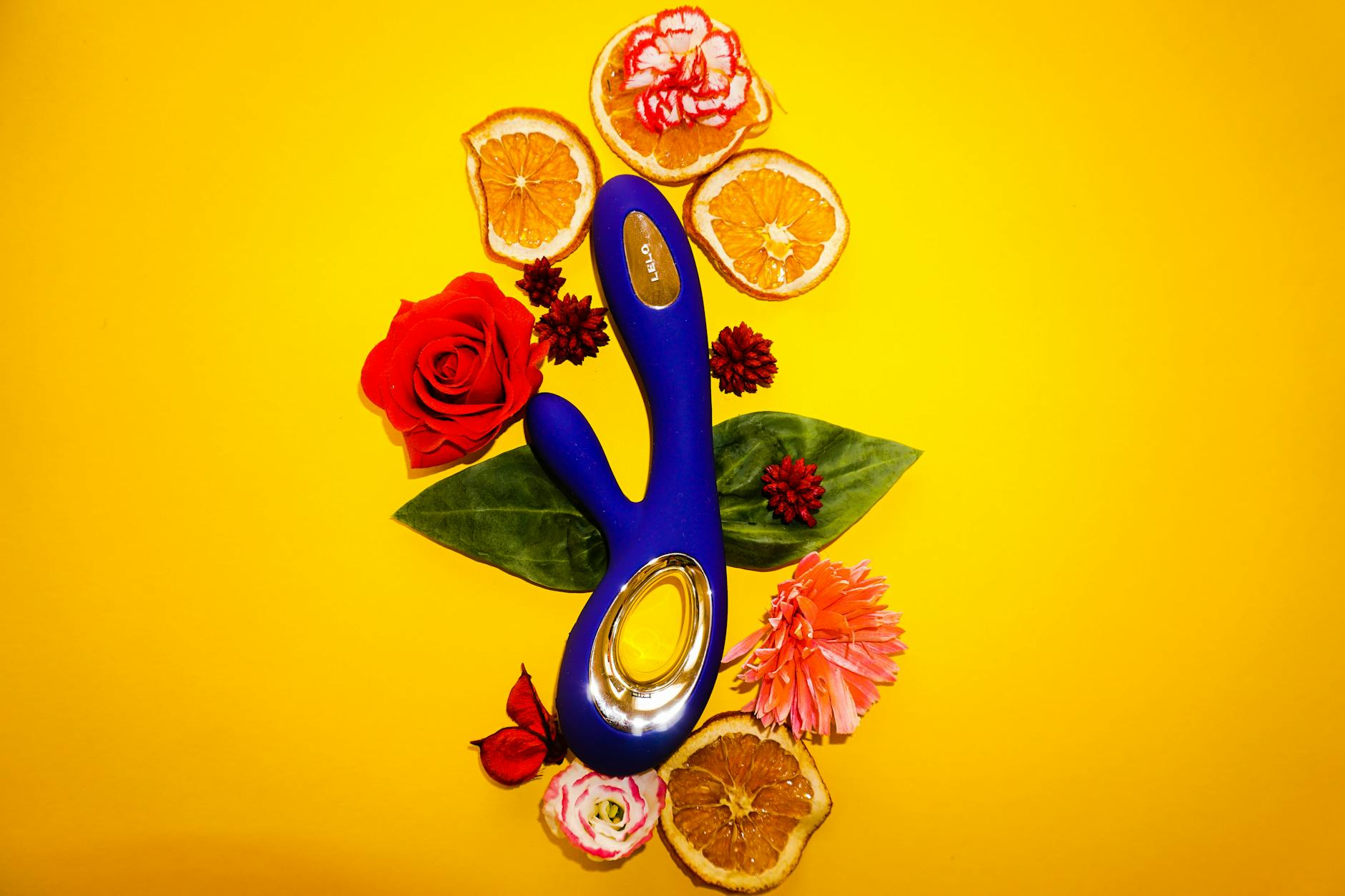
Your hormones are changing your pleasure. That's not a problem.
Hormones don't just affect mood or energy. They shift how your clitoris responds to touch, how quickly your body warms up, and how intense an orgasm can feel. If your pleasure map changes week to week, you're not broken. You're simply cycling through different neurological states. And once you understand that, a lemon vibrator becomes even more powerful because you can actually work with your body instead of expecting it to perform the same way every day.
The good news: understanding these shifts and adapting your technique takes maybe five minutes of awareness. After that, your pleasure deepens.
How your cycle affects clitoral sensitivity
Estrogen and testosterone fluctuate together. In the follicular phase (roughly days 1-14 of a 28-day cycle), estrogen climbs. Your clitoris becomes more sensitive to light touch and suction. In the luteal phase (roughly days 15-28), progesterone rises and estrogen dips. Your clitoris often needs slightly more direct pressure to reach the same intensity. Neither is better. They're just different states requiring different strategies.
Blood flow to the genitals also shifts. Around ovulation, when testosterone peaks, blood flow increases. You'll notice your vulva feels more swollen, more receptive. Two weeks later, blood flow drops. Your tissues feel less full. A lemon vibrator that felt perfect on day 12 might feel too subtle on day 25 unless you adjust the setting.
Water-based lubricant becomes more or less necessary depending on where you are. Around ovulation, your body produces more natural lubrication. Mid-luteal, the well often runs drier. Plan accordingly.
The follicular phase: lighter touch works better
Days 1-14, roughly. Estrogen is climbing. Your clitoris is hypersensitive.
This is when a lemon vibrator's lower settings shine. Start with pattern 1 or 2 instead of 3. The air-suction mechanism creates gentle waves of pressure that feel exquisite when your tissue is already primed. Many people find orgasms come faster during this window and often feel more diffused, radiating outward rather than concentrating in one spot.
Your warm-up time also shortens. Budget 8-12 minutes instead of 15-20. Your body is literally more prepared to respond.
If you usually alternate between patterns, this is the phase to experiment with holding one pattern steady. The sensitivity means novelty isn't as necessary. Consistency and simplicity often work better. Let the sensation build rather than chasing intensity through changing patterns.
The luteal phase: you need more intentional intensity
Days 15-28. Progesterone rises. Sensitivity drops. Your nervous system is also slightly more activated (which is partly why stress feels higher mid-cycle).
This is when you move to pattern 3, 4, or 5 on your lemon vibrator. You're not using more intensity because something is wrong. You're using more intensity because your tissues genuinely need it to reach the same state of arousal as they did ten days ago. This is not a failure. This is adaptation.
Your warm-up time also expands again. Give yourself 15-20 minutes, or even longer if you're in the last few days before menstruation. Progesterone is sedating. Arousal takes deliberate practice, not just passive waiting.
This is also the phase where many people find they prefer partnered pleasure or multiple sensations. Some want penetration alongside clitoral stimulation. Others want a hand on their chest or neck. Your brain's dopamine is lower, so you need more multi-sensory input to feel fully engaged. That's not neediness. That's biology.
Menstruation itself: touch sensitivity varies
Days 1-5, roughly. Estrogen and progesterone both drop sharply. Your pain sensitivity actually increases, which means even light touch can feel overstimulating in the first 24-48 hours.
Many people skip pleasure entirely during the heavy flow days and that's fine. But if you want to use your lemon vibrator during menstruation, keep it on the gentlest settings and use extra lubrication even if you don't usually need it. The vaginal environment is more delicate. Suction that felt amazing yesterday might feel irritating today.
Some people find that gentle orgasm actually reduces cramp pain by releasing endorphins. If that's you, lower settings and longer build times are your friends. If menstrual pleasure feels wrong, honor that. There's no prize for forcing it.
Ovulation week: this is your peak intensity window
Roughly day 12-16. Testosterone peaks. Estrogen surges. Blood flow to your genitals is at its annual maximum.
Your clitoris is engorged and receptive. You'll notice it feels fuller, slightly more prominent. This is when a lemon vibrator at higher settings can create truly intense, full-body responses. Your orgasms often have more muscular intensity. Your recovery time between orgasms shortens. Pleasure comes easier and lasts longer.
This is also often the phase where desire itself is higher. You're thinking about pleasure more, initiating more, wanting more variety. That's not coincidence. Your brain is literally primed for it. If you want to try new patterns, new techniques, or combine your lemon vibrator with something else, ovulation week is your laboratory.
Expect orgasms to feel different too. Faster to build, more intense at the peak, potentially multiple. It's not that your vibrator suddenly works better. It's that your body is in its optimal state for response.
Tracking what actually happens to your pleasure
All of this is biology, but your experience is individual. Some people notice these shifts acutely. Others find the differences subtle. The way to know is to pay attention.
For one full cycle, notice: What day does your clitoris feel most receptive to light touch? What day do you need more pressure to feel satisfied? When do orgasms come fastest? When do they require more sustained effort? When do you want variety and when do you want simplicity? Write it down. Your notes become the map of your cycle.
After three cycles, patterns emerge. You'll know exactly which settings on your lemon vibrator align with which phases. You'll know whether you need extra lubrication or whether your body is already there. You'll know whether a given day is a "settle in and enjoy" day or a "bring more tools" day.
That knowledge is power. You're no longer guessing. You're working with your body's actual rhythm.
When medication or stress disrupts the pattern
If you take hormonal contraception, your cycle is chemically regulated. Pleasure shifts still happen, but they're different because your hormone levels are artificially maintained. Some people on the pill notice pleasure feels more consistent day-to-day. Others notice it dips during the placebo week. Again, your body is your data.
If you've recently started antidepressants or other medications, or you're under acute stress, your cycle might become irregular or your sensitivity might flatten. This is temporary, usually. As your body adjusts or stress resolves, the pattern re-emerges. For now, don't chase the old rhythm. Use your lemon vibrator on whatever setting your body wants today. Flexibility beats rigid expectations.
For more detail on how medications specifically affect pleasure with a lemon vibrator, the guide on using lemon vibrators when starting antidepressants breaks down the neuroscience and practical solutions.
Syncing pleasure with your partner's timing
If you have a partner, their cycle (if they have one) might be different from yours. Pleasure syncing gets more complex. But it also gets more interesting.
If you're both menstruators, you might find your sensitivity cycles are offset by weeks. This actually works in your favor. When one person's clitoris is hypersensitive, the other's is reaching its lower threshold. You're rarely both struggling at once. You can take turns being the one with more desire or more intensity, and that naturally creates rhythm in how you approach pleasure together.
If your partner doesn't menstruate, their pleasure response is more neurologically stable. That's useful information. It means you can rely on their responsiveness to you while you're navigating your own shifts. They become the steady ground while you're flowing.
For deeper strategies on navigating different pleasure timelines, the post on partners with different pleasure timelines offers concrete approaches.
The bigger picture: pleasure as a practice, not a performance
Understanding your cycle doesn't make you high-maintenance. It makes you literate. You're fluent in your own body's language. A lemon vibrator isn't a tool that should work identically every day. It's a tool that works best when you're paying attention to what your body actually needs today, not what it needed three weeks ago.
That attention, that flexibility, that refusal to expect your body to perform on an arbitrary standard. That's where real pleasure lives.
People also ask
How do I know which phase of my cycle I'm in if I have irregular periods?
Irregular cycles make this harder, but not impossible. You're tracking sensation, not perfection. Notice when your clitoris feels most receptive and when it needs more pressure. Notice when you want multiple orgasms and when one feels like enough. Patterns emerge even with irregular timing. You might cycle through these phases over 25 days instead of 28, or 32 instead of 28. The phases themselves are consistent even if their timing isn't. A cycle tracking app helps, but your body's actual signals matter more than any calendar.
Can I use a lemon vibrator during my period if I have a heavy flow?
Yes, with modifications. Use your lowest settings. Use extra water-based lubricant. Keep sessions shorter. Your tissues are more sensitive and more delicate, so gentleness matters more than usual. Some people find that the first 24-48 hours of heavy flow are too intense for any genital pleasure, and that's completely valid. If you want to use your lemon vibrator mid-cycle, wait until flow lightens or stick to external-only use. Never insert anything during heavy flow unless you're very confident in your comfort level.
Does hormonal birth control change how a lemon vibrator feels?
Yes. Hormonal birth control (pills, patches, IUDs, implants) maintains constant hormone levels rather than cycling them. Most people on hormonal contraception notice that pleasure feels more consistent day-to-day. Some notice it's slightly lower overall because the pill's estrogen is usually lower than your natural peak. Some find pleasure actually increases because cycle-related anxiety or mood changes disappear. Your experience depends on the method and your individual neurology. If you want to experiment with how your lemon vibrator feels off hormonal birth control, the post on stopping hormonal contraception covers the transition period specifically.
What if my partner and I have different cycle schedules?
That's the norm, actually. If you both menstruate, your cycles are likely offset. Instead of fighting that, use it strategically. When one person is in the high-sensitivity follicular phase, the other is usually in the lower-sensitivity luteal phase. You can take turns being the one who initiates more or needs more intensity. This naturally creates variety and ensures you're not both struggling for pleasure at the same time. Communication matters most here. Check in about timing. Sometimes you're both in a good phase. Sometimes you're offset. Neither is better, just different.
How long does it take to understand my personal cycle pattern?
Three full cycles, minimum. That's roughly 12 weeks of actual data. After one cycle, you'll notice some patterns. After three, your map is accurate enough to rely on. You'll know what your high-intensity days feel like, what your low-pressure days feel like, when warm-up time matters most. Keep notes. One sentence per day is enough: "Day 10, very sensitive, came fast on pattern 2" or "Day 22, needed pattern 4, took longer." Over time, these notes reveal the exact rhythm of your pleasure.
Can stress disrupt my cycle pattern and affect pleasure?
Completely. Acute stress delays ovulation, flattens hormone peaks, and can numb pleasure responses temporarily. Your lemon vibrator might feel underwhelming during high-stress periods not because something is broken, but because your cortisol is high and your dopamine is low. Pleasure sensitivity returns once stress resolves. During stressful seasons, don't expect your usual pattern to hold. Use your vibrator on whatever setting your body wants that day. Be flexible. Stress is temporary. Your sensitivity will come back.
The takeaway
Your body isn't inconsistent. It's cycling. Your pleasure isn't supposed to feel identical every single day. A lemon vibrator works best when you work with your cycle, not against it. Pay attention for three months. Notice what changes. Adapt your technique. Then watch how much deeper and more reliably satisfying your pleasure becomes. That's not effort. That's literacy.