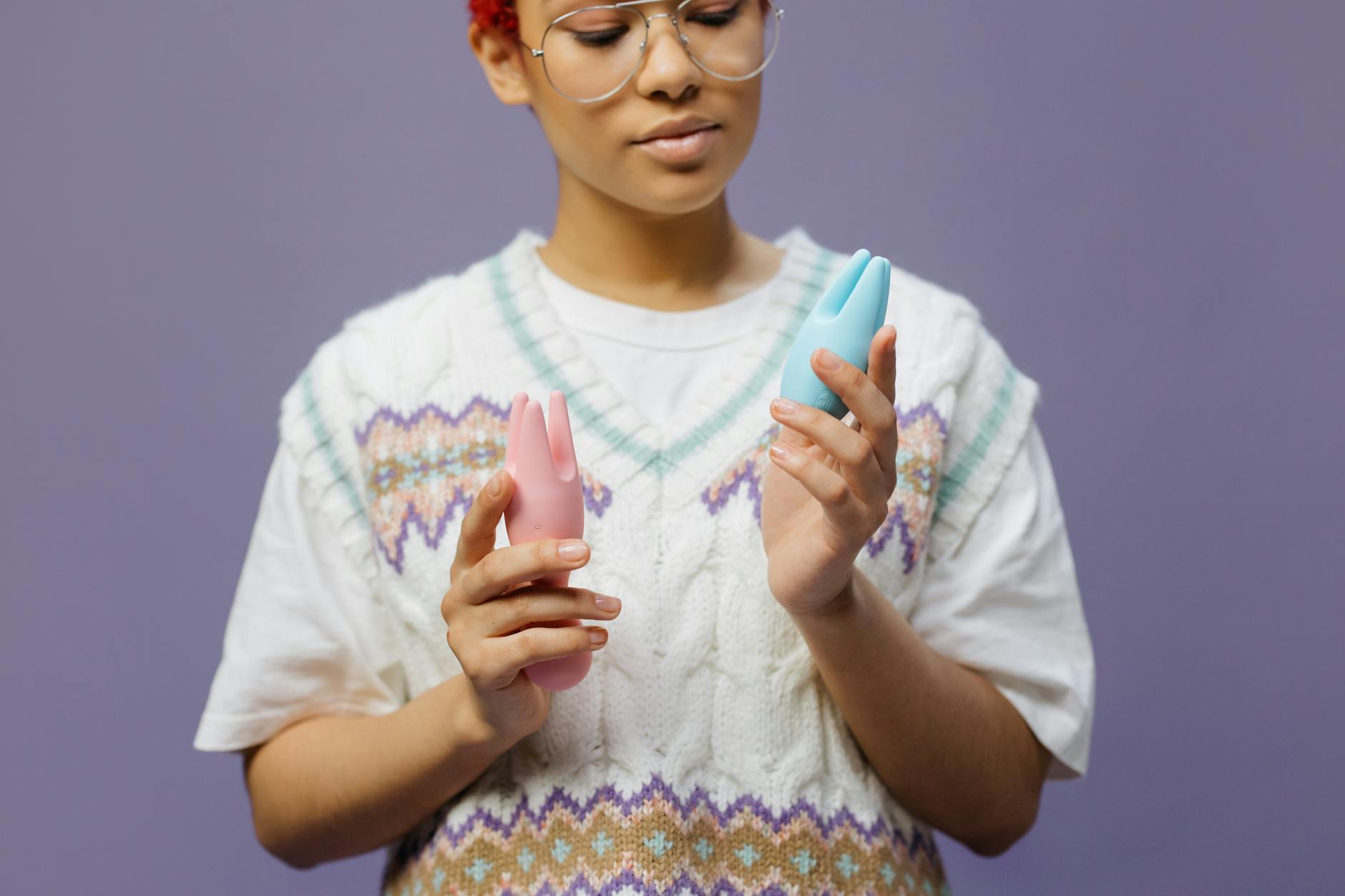
Let's talk about the desire crisis nobody mentions
You don't have to be menopausal for your hormones to wreck your sex drive. Thyroid dysfunction, PCOS, changes in birth control, postpartum recovery, chronic stress, even seasonal shifts in cortisol can flatten desire without warning. And here's the thing: most resources about low libido assume you're either newly postpartum or deep in menopause. Nobody talks about the hormonal chaos in between.
I see this constantly in my practice. A woman changes her pill formulation. Within weeks, her desire tanks. Her partner doesn't understand. She doesn't understand. She assumes something's wrong with her relationship or her body. Usually, it's just hormones doing their job, and her nervous system hasn't caught up yet.
The good news? Lemon vibrators like the Lem work brilliantly during these transitions because they bypass the friction and pressure that hormonal shifts make exhausting, and they activate pathways in your brain that don't require high baseline desire to start.
How hormones outside menopause tank your libido
Most people think of estrogen as the desire hormone. It's not. Testosterone drives desire in everyone with ovaries. But estrogen sets the stage. When estrogen is low or unstable—which happens on certain birth control pills, during the luteal phase, after thyroid medication changes, or with autoimmune flare-ups—arousal becomes harder to access.
Add cortisol to the mix. Chronic stress literally suppresses testosterone production. So does undereating, overtraining, or sleep deprivation. You don't need a dramatic hormone crash to lose desire. Sometimes it's just your nervous system in survival mode, signaling "this is not the time to reproduce."
The third player is dopamine. Arousal and pleasure are dopamine-driven. When hormones shift, dopamine receptors change sensitivity. What used to turn you on might not register. You're not broken. Your brain's reward circuitry just recalibrated.
Why lemon vibrators cut through the hormonal fog
Here's where lemon clitoral vibrators and suction technology get clever. They don't require the same neural pathway activation that traditional vibrators do. A standard vibrator depends on you reaching a certain arousal threshold before it feels good. If your dopamine is low or your arousal is sluggish, you're chasing sensation that isn't coming.
Lemon sexual toys work differently. Suction stimulation bypasses the friction-dependent pleasure system. It directly engages the extensive nerve network around the clitoris without requiring you to be "turned on" first. For people whose hormonal shifts have dampened arousal capacity, this is transformative. You don't have to build to pleasure. Pleasure builds on its own.
I recommend starting on the lowest intensity setting. The Lem's gentler patterns activate blood flow and nerve sensitivity without overwhelming a nervous system that might be in a stress state. This is particularly helpful if you're dealing with hormonal shifts alongside anxiety or burnout.
The timing question: when to use a lemon vibrator during your cycle
If you're still cycling (early-to-mid reproductive years, perimenopausal, or PCOS managing), hormonal desire isn't constant. Follicular phase? Usually higher testosterone, more accessible arousal. Ovulation? Peak sensitivity and faster response. Luteal phase? Everything slows down. It's biological, not a failure.
Here's my advice: use lemon vibrators strategically during low-desire windows. The luteal phase is when people report that suction toys feel better than traditional vibrators. Why? Because you're not chasing sensation. You're letting the device do the work while your system recalibrates.
If you're on a birth control pill that's tanking desire, you've got options. You can use a lemon vibrator to rebuild connection to pleasure while you decide whether to switch formulations. You're not waiting for desire to return on its own. You're actively engaged in rebuilding your pleasure baseline.
When to know it's not just hormones
Before you assume low desire is purely chemical, check a few things. Are you sleeping enough? Are you moving your body in ways that feel good, not punishing? Is your relationship emotionally safe? Are you stressed about money, work, or family? Are you on an SSRI or other medication that affects arousal?
Hormones are one player. So is nervous system regulation, emotional safety, and life context. The best lemon clitoral vibrator won't restore desire if you're in a relationship where you don't feel heard, or if you're running on five hours of sleep. It will help rebuild pleasure when those foundations exist.
If desire has been absent for months and you're sleeping well, managing stress, and feel safe with your partner, talk to a doctor. Thyroid issues, testosterone deficiency, depression, or other medical conditions deserve evaluation. A vibrator is a tool, not a cure for an underlying health issue.
The reconnection work: how lemon vibrators facilitate deeper practice
One of the strangest things about hormonal desire loss is how quickly you can disconnect from your own body. Weeks of low arousal can create a belief that you're permanently changed. You start avoiding touch. You stop noticing sensation. Your body becomes a neutral landscape.
Lemon vibrators interrupt that disconnection. They give you permission to feel something without the pressure to perform or respond a certain way. You're not trying to orgasm. You're rebuilding a conversation with your nervous system.
Start by exploring alone. Set aside 20 minutes with no expectation. Use the Lem on pattern 1 or 2. Just notice. What do you feel? Where? Does it shift? This isn't about climax. It's about waking up sensation and proving to yourself that pleasure is still available, even if access feels different.
Many people I work with report that solo practice with lemon sexual toys restores confidence. Once you trust your body again, reintroducing pleasure with a partner becomes possible. You're not anxious about whether you'll respond. You already know you will.
Talking to your partner about the shift
If you're in a relationship, the hormonal desire shift affects both of you. Partners sometimes interpret lower libido as rejection. That's a conversation worth having directly, and it's best to have it without a vibrator in hand for the first time.
Here's what works: "My hormones have shifted. I'm rebuilding connection to my pleasure. This isn't about you. I'm going to explore with a lemon vibrator to remember what works for me. I'd love for you to be part of this when I'm ready." That's honest, it's inclusive, and it sets expectations.
When you do reintroduce pleasure with a partner, lemon adult toys remove pressure. You're not dependent on spontaneous arousal. You can use the device together, which often feels lower-stakes than traditional foreplay when hormones are off.
Questions people ask about lemon vibrators and hormonal shifts
What if a lemon vibrator doesn't work immediately?
Give it time. If you've been in low-desire mode for weeks, your nervous system needs resetting. Three to five solo sessions with the Lem before you expect pleasure to flow. You're not broken if it takes that long. You're recalibrating.
Can using a lemon vibrator too much reset my dopamine for human touch?
No. Suction stimulation doesn't carry the same addictive charge as high-intensity vibration. In fact, many people find that gentle lemon clitoral vibrators feel more natural and less desensitizing than traditional toys. You're not chasing a dopamine spike. You're rebuilding baseline sensitivity.
Should I use lube with a lemon vibrator if my hormones have affected lubrication?
Always. Even if your natural lubrication is flowing fine, external lube reduces friction and signals to your body that this is safe, pleasurable touch. Water-based is best with silicone toys. This is especially important during the luteal phase or if you're on hormonal contraception that affects vaginal moisture.
What if I'm on thyroid medication and my desire hasn't returned?
Thyroid medication works slowly. It can take two to three months for dose adjustments to stabilize. Don't wait passively. Use this period to rebuild pleasure with a lemon vibrator. You're not fixing the hormonal issue, but you're maintaining your sexual wellbeing in the meantime.
Can I use a lemon vibrator if I'm transitioning birth control methods?
Yes. Actually, this is an ideal time. Many people experience a desire dip when switching pills or moving from hormonal to non-hormonal contraception. Using a lemon sexual toy during the transition reminds your body that pleasure is still available, even when your hormones are in flux.
How do I know if my low desire is temporary or a sign of something deeper?
Temporary hormonal desire loss improves within weeks to a few months. You notice patterns tied to your cycle, to stress, or to when you took new medication. If it's been three months with no improvement and nothing has changed hormonally, talk to a doctor.
The bottom line: hormones change, pleasure persists
Your body isn't static. Hormones shift constantly. And that's actually okay. What isn't okay is suffering through desire loss alone, assuming you'll just bounce back on your own. You won't. You'll reconnect through practice.
Lemon vibrators and suction toys like the Lem work so well during hormonal shifts because they ask nothing of you except to feel. They don't require high baseline arousal. They don't rely on friction or intensity. They just activate your nervous system and remind you that pleasure is part of who you are, not something that disappears when your hormones fluctuate.
Start solo. Notice what you feel. Give yourself permission to rebuild this part of yourself slowly. When you're ready, bring a partner into the conversation. Most couples find that reintroducing pleasure together during a hormonal shift actually deepens their connection. You're not performative. You're honest about what your body needs. That's intimacy.
Your desire will return. But it returns faster when you actively engage with it, not when you wait for it to magically reappear.